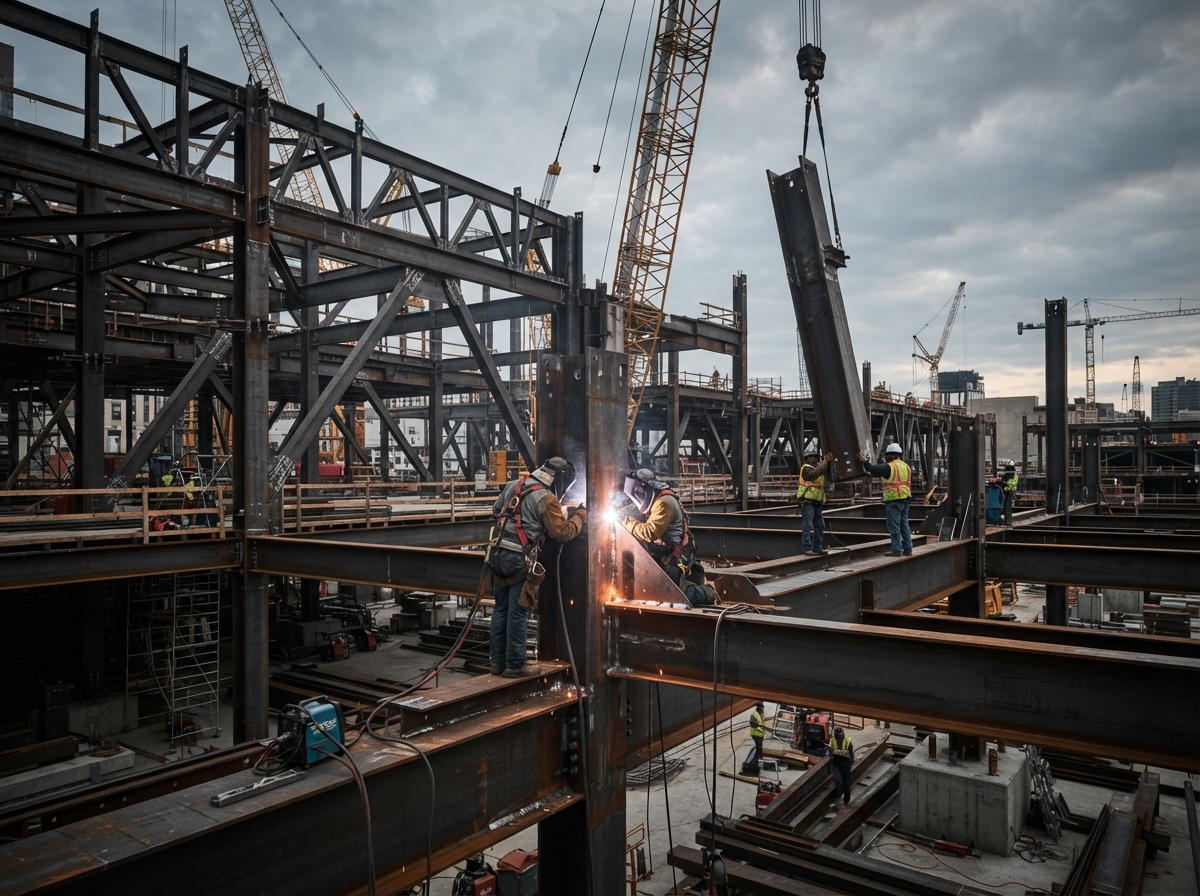
Structural Welding Services in Hialeah, FL
Steel frames, beams, supports and structural metalwork built for strength and durability.
What This Service Includes
Structural welding is the backbone of any build that depends on steel. Micha Solution Welding handles steel frames, beams, columns, supports, and bracing — welded to deliver the strength and durability structural applications demand.
From heavy structural assemblies to targeted reinforcement work, each project is evaluated for load, fit, and long-term performance so the finished metalwork holds up under real-world conditions.
Service Includes
- Steel beam and column welding
- Structural frame assembly
- Supports, bracing, and reinforcement
- Connections engineered for load and durability
Common Applications
- Building frameworks and structural skeletons
- Roof and floor structures
- Container structural reinforcement
- Commercial and industrial structural work
Why Work With Us
- 15 years of structural welding experience
- Custom solutions evaluated project by project
- Mobile service for on-site structural welding when applicable
- Workmanship focused on strength, fit, and clean execution
What Is Structural Welding and Why It Matters
Structural welding is the process of joining steel components that are designed to carry loads and form the skeletal framework of a building, platform, or other structure. Unlike general welding, which may cover a wide range of repair and fabrication work, structural welding is specifically concerned with connections that bear weight, resist forces, and contribute to the structural integrity of the finished assembly. Every weld in a structural application must be strong enough to handle the loads it was designed for, and it must perform reliably over the life of the structure.
At Micha Solution Welding, structural welding is one of our core capabilities. We weld steel beams, columns, frames, braces, supports, and connections for projects across Hialeah, Miami-Dade County, and Fort Lauderdale. Each structural welding project begins with an evaluation of the loads, the fit, and the long-term performance requirements, so the finished metalwork holds up under the conditions it will actually face.
In South Florida, structural welding faces additional challenges. High winds, humidity, salt air, and seismic activity all impose stresses on steel structures. A structural weld that is properly executed will resist these forces; one that is not can develop cracks, corrosion, or failure over time. That is why we approach every structural weld with an understanding of both the immediate load requirements and the environmental conditions that will test the joint over years of service.
The Role of Structural Steel in Construction
Structural steel is the backbone of modern construction. It forms the frames of buildings, the supports of platforms, the skeletons of warehouses, and the reinforcement of existing structures. Steel's strength-to-weight ratio, durability, and versatility make it the material of choice for load-bearing applications across residential, commercial, and industrial construction.
In a typical structural steel project, individual steel members — beams, columns, angles, channels, and plates — are cut to size, positioned, and then welded together to form a structural assembly. The quality of those welds determines whether the assembly will perform as designed. A structural weld is not just a connection; it is a load path. Forces travel through the weld from one member to another, and if the weld is weak, incomplete, or poorly executed, it becomes the point of failure in the structure.
This is why structural welding requires experience and precision. The welder must understand the type of joint being made — a butt joint, a tee joint, a lap joint, or a corner joint — and select the appropriate weld type, size, and technique. The weld must penetrate deeply enough into the parent metal to create a true fusion, not just a surface bond. It must be free of defects such as porosity, undercut, or incomplete fusion that could compromise its strength.
Structural Welding vs. General Welding
While general welding covers a broad range of joining and repair work, structural welding is a more specialized discipline focused on load-bearing connections. The distinction matters because the requirements, techniques, and consequences of failure are different.
General welding may involve repairing a gate hinge, fabricating a custom bracket, or welding a decorative metal component. These projects require skill and precision, but the loads involved are typically lower, and the consequences of a weld failure are less severe. Structural welding, by contrast, involves connections that support buildings, platforms, equipment, and people. A failure in a structural weld can lead to collapse, injury, or significant property damage.
This means structural welding requires additional attention to joint preparation, weld penetration, weld size, and inspection. The welder must ensure that the weld is not just visually acceptable but structurally sound — that it fully fuses the members, that it is the correct size for the load, and that it is free of defects that could initiate a crack or failure. At Micha Solution Welding, we bring 15 years of experience to structural welding projects, with a focus on strength, fit, and long-term performance.
Common Structural Welding Applications
Structural welding is used across a wide range of construction and fabrication projects. Some of the most common applications we handle include:
Building Frameworks
The steel frame of a building — its beams, columns, and bracing — is assembled through structural welding. Each connection in the frame must be strong enough to transfer loads from one member to the next and to resist the forces the building will experience, including wind loads, gravity loads, and in some cases seismic loads. We weld structural frames for commercial buildings, industrial facilities, and residential construction projects, ensuring each connection meets the load requirements.
Roof and Floor Structures
Steel roof beams and floor framing rely on structural welding to create load-bearing assemblies. Whether framing a roof over a building, a platform over shipping containers, or a mezzanine floor in a warehouse, the welded connections must carry the weight of the structure above plus any live loads. Our roof beams and steel framing work involves welding beams, joists, and decking supports into structural assemblies designed for the specific load requirements of the project.
Container Structural Reinforcement
Shipping containers are increasingly used as building blocks for storage units, workshops, offices, and even homes. However, cutting openings in a container — for doors, windows, or pass-throughs — removes structural steel and weakens the container's integrity. Structural welding is used to reinforce these openings with welded steel frames that restore the container's strength. We handle container modifications that include structural reinforcement for openings, stacking, and load-bearing applications.
Platform and Access Structures
Industrial and commercial facilities often require elevated platforms, access stairs, catwalks, and equipment supports. These structures are built from structural steel and assembled through welding. Each platform must be strong enough to carry the weight of personnel, equipment, and materials, and the welded connections must be reliable under constant use. We fabricate and weld platform structures for industrial and commercial clients throughout Miami-Dade CountyMiami-Dade County and Fort Lauderdale.
The Structural Welding Process
Every structural welding project follows a systematic process to ensure the finished assembly meets the load and performance requirements. Understanding this process helps property owners and contractors know what to expect when they hire a structural welder.
The process begins with evaluation. Before any welding starts, we assess the project requirements — the loads the structure will carry, the type and thickness of the steel, the joint configurations, and the environmental conditions. This evaluation determines the welding process, the filler metal, the joint preparation, and the weld sizes needed for each connection.
Next comes preparation. Steel members are cut to size, positioned, and aligned. Joint surfaces are cleaned of rust, paint, oil, and other contaminants that could interfere with weld quality. Proper fit-up is critical — if the pieces are not aligned correctly, the weld will not transfer loads effectively. We take time to ensure each joint is properly prepared before welding begins.
The welding itself is performed using the process selected for the project — typically stick welding (SMAW) or flux-cored arc welding (FCAW) for structural applications, as these processes provide the deep penetration and deposition rate needed for thick structural steel. Each weld is executed with attention to penetration, bead profile, and defect prevention.
After welding, the connections are inspected. We check for visual defects — cracks, porosity, undercut, incomplete fusion — and address any issues. For projects that require it, we coordinate with third-party inspection or testing. The finished structure is then ready for service, with welded connections designed to perform under the intended loads.
Welding onto Existing Structures
Many structural welding projects involve modifying or reinforcing existing structures rather than building new ones. A property owner may need to add a steel beam to support a load. A contractor may need to reinforce a connection that has developed a crack. A business may need to modify a platform to accommodate new equipment.
Welding onto existing structures requires additional care. The existing steel must be evaluated for its condition, thickness, and weldability. Surface preparation is critical — existing paint, rust, or coatings must be removed from the weld area to ensure proper fusion. The heat input from welding must be controlled to avoid damaging adjacent materials or creating distortion in the existing structure.
We have extensive experience welding onto existing structural steel. Whether it is adding reinforcement, modifying a connection, or repairing a damaged weld, we evaluate the existing structure and plan the welding approach to ensure the new work integrates properly and performs reliably.
Structural Welding and Engineering
Structural welding and structural engineering are related but distinct disciplines. Engineering involves the calculation of loads, the specification of member sizes, and the design of connections. Welding involves the execution — physically joining the steel members according to the design.
At Micha Solution Welding, we handle the welding and fabrication side of structural projects. If your project requires stamped engineering drawings — which is common for new construction, significant modifications, or projects subject to permitting — we recommend coordinating with a licensed structural engineer. We work to the engineer's specifications, executing the welds as designed and ensuring the fabricated assembly matches the engineered plans.
This collaborative approach ensures that the structural design is sound and the welding execution meets the design intent. For projects that do not require engineering — such as many repairs, modifications, and custom fabrications — we evaluate the project based on our experience and execute the welding to meet the performance requirements.
Why Structural Welding Experience Matters
Structural welding is not the place to learn on the job. The consequences of a poorly executed structural weld can be severe — structural failure, property damage, and safety risks. Experience matters because it teaches a welder how to read steel, how to anticipate problems, and how to execute welds that will hold up under real-world loads.
With 15 years of experience in structural welding, we have worked on a wide range of projects — from residential framing to commercial build-outs to industrial structural modifications. This experience informs every decision we make: the welding process, the joint preparation, the weld sequence, and the inspection. We understand how steel behaves under heat, how different joint configurations affect weld quality, and how to prevent the defects that lead to premature failure.
If you have a structural welding project in Hialeah, Miami-Dade County, or Fort Lauderdale, we would welcome the opportunity to discuss it. Call us at (305) 515-0490 or request a free estimate. We will evaluate your project, explain our approach, and provide a personalized quote based on the scope and requirements.
Serving Miami-Dade County and Broward County with mobile, on-site welding and custom metal fabrication.
Structural Welding Questions
Do you handle large structural projects?
We take on structural welding projects scaled to the requirements of the work. Contact us with your project details and we'll discuss scope and feasibility.
Can you weld onto existing structures?
Yes. We evaluate each situation individually to determine the best approach for welding onto or reinforcing existing structural steel.
Do you provide structural engineering?
We handle the welding and fabrication. If your project requires stamped engineering, we recommend coordinating with a licensed engineer — we'll work to their specifications.
Related Services
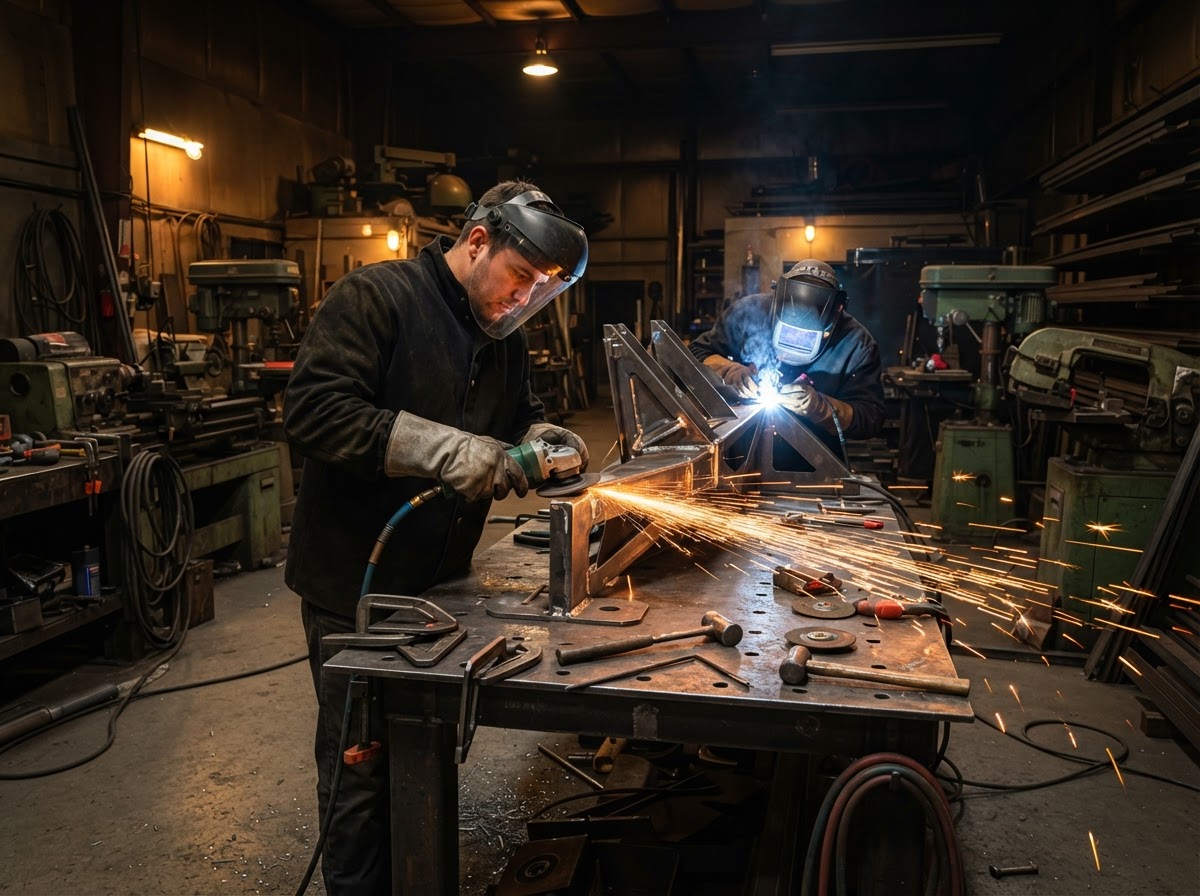
Custom Metal Fabrication
Custom metal components and structures fabricated precisely to your project specifications.
Learn More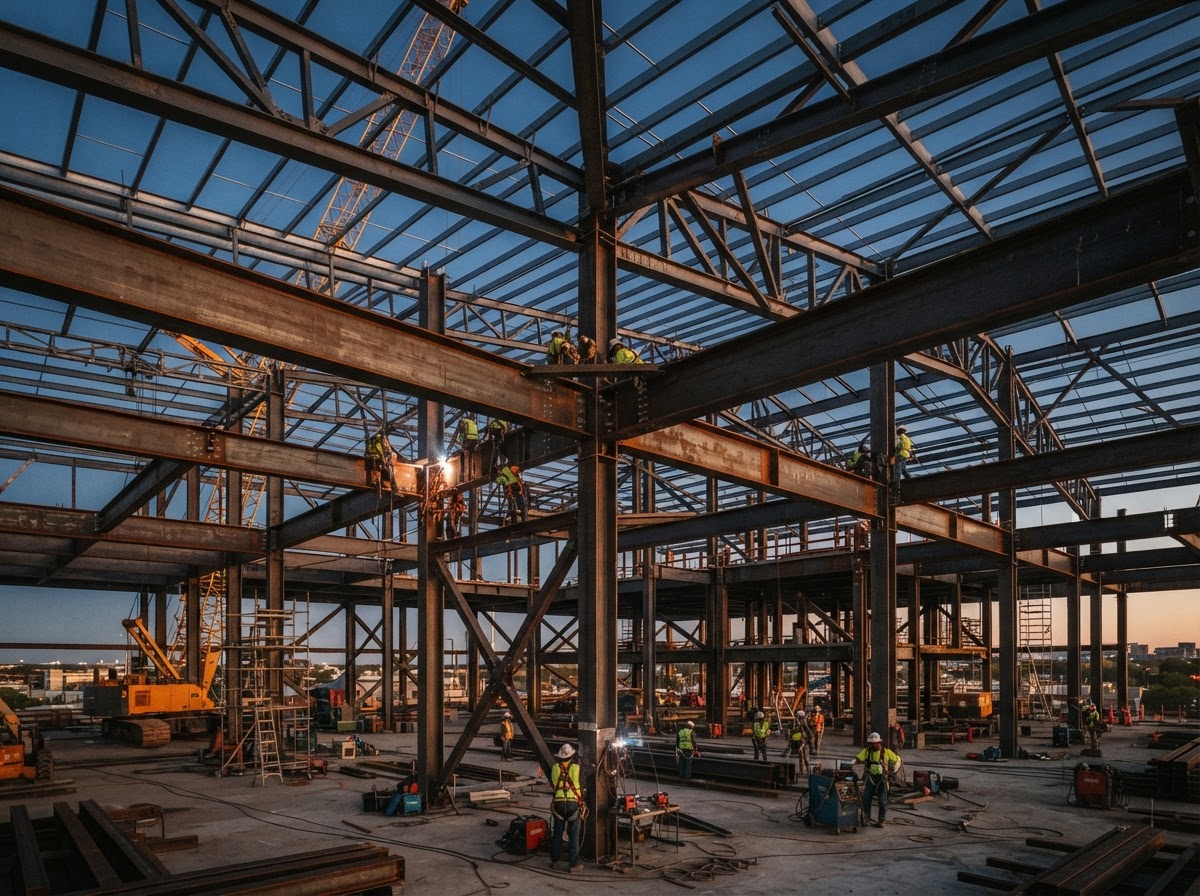
Roof Beams & Steel Framing
Steel beams and framing solutions for roof and structural applications.
Learn More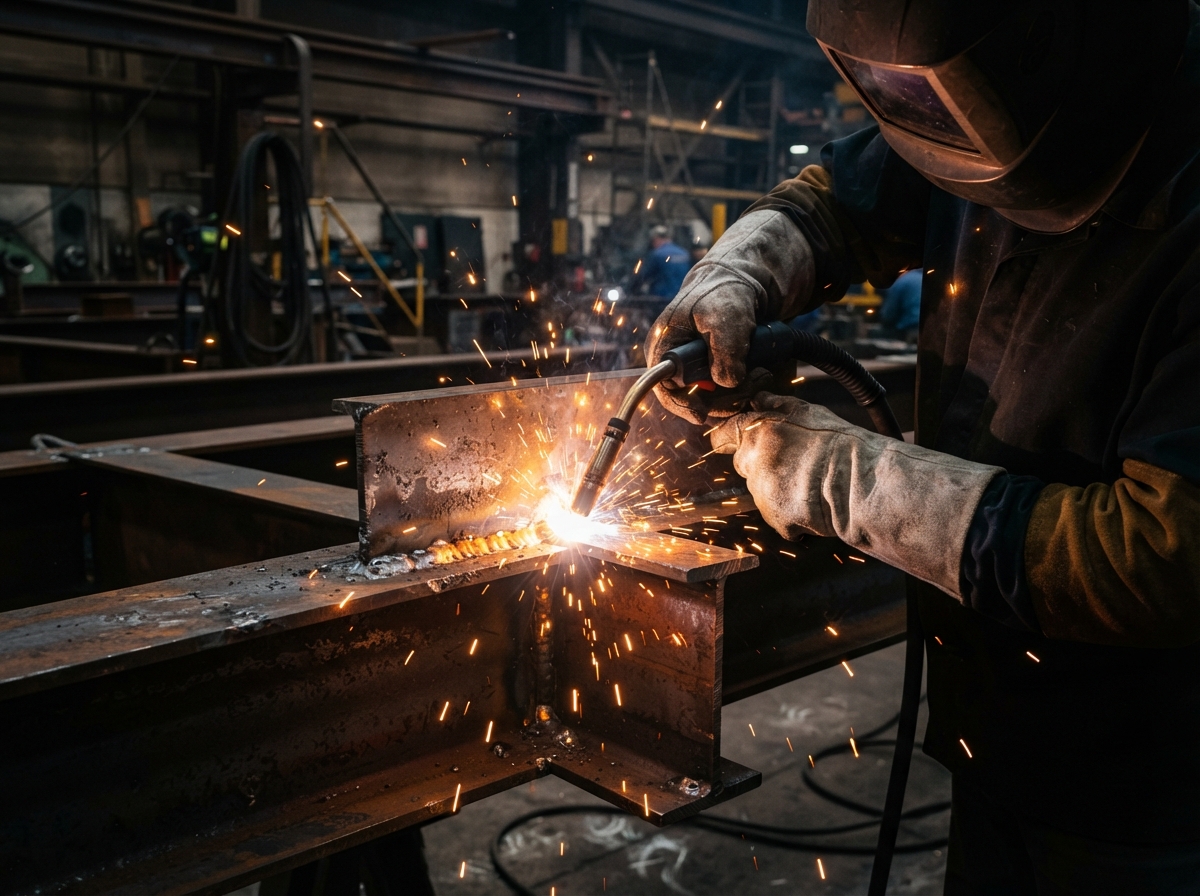
General Welding
Professional customized welding solutions adapted to the specific requirements of each project.
Learn MoreServing Communities Across Miami-Dade & Broward Counties
We provide structural welding and mobile welding services to communities throughout Miami-Dade County and Broward County. Select your city to learn more.
Related Services & Links
- Custom Metal Fabrication
- Roof Beams & Steel Framing
- General Welding
- Welding in Hialeah, FL
- Welding in Miami, FL
- Welding in Miami Gardens, FL
- Welding in Homestead, FL
- Welding in Doral, FL
- Welding in Fort Lauderdale, FL
- Welding in Hollywood, FL
- Welding in Pembroke Pines, FL
- Welding in Coral Springs, FL
- Miami-Dade County Service Area
- Broward County Service Area
- Request a Free Estimate
- View Our Projects
- Welding Gallery
Ready to Get Started?
Request a free estimate for your structural welding project, or call us directly to discuss the details.
Ready to Start Your Welding Project?
Tell us what you need and get a personalized estimate for your project — or call us directly and we'll talk it through.