Defining Structural Welding
Structural welding is the process of joining steel components that carry load within a building, frame, or structure. It covers beams, columns, braces, connections, and the framework that gives a building its structural integrity. Unlike light repair welding or decorative metalwork, structural welding directly affects the safety and performance of a structure. A poorly executed weld in a load-bearing connection can compromise an entire building.
The term structural welding encompasses a range of work. It includes welding steel beams to columns, connecting frame members, attaching braces and supports, fabricating structural assemblies, and reinforcing existing structural steel. Each of these connections must be strong enough to carry the loads placed on them and durable enough to perform reliably for the life of the structure.
At Micha Solution Welding in Hialeah, Florida, structural welding is one of the core services we provide. With 15 years of experience, we handle steel beam and column welding, frame assembly, supports and bracing, and connections built for load and durability. Each structural project is evaluated individually to ensure the finished welds meet the demands of the specific application.
The Critical Role of Weld Quality
In structural welding, quality is not a matter of aesthetics — it is a matter of safety. A structural weld must have full penetration through the joint, proper fusion between the weld metal and the base metal, and sufficient size to carry the design load. Defects like cracks, porosity, lack of fusion, or incomplete penetration can significantly reduce the strength of a connection and create points of failure.
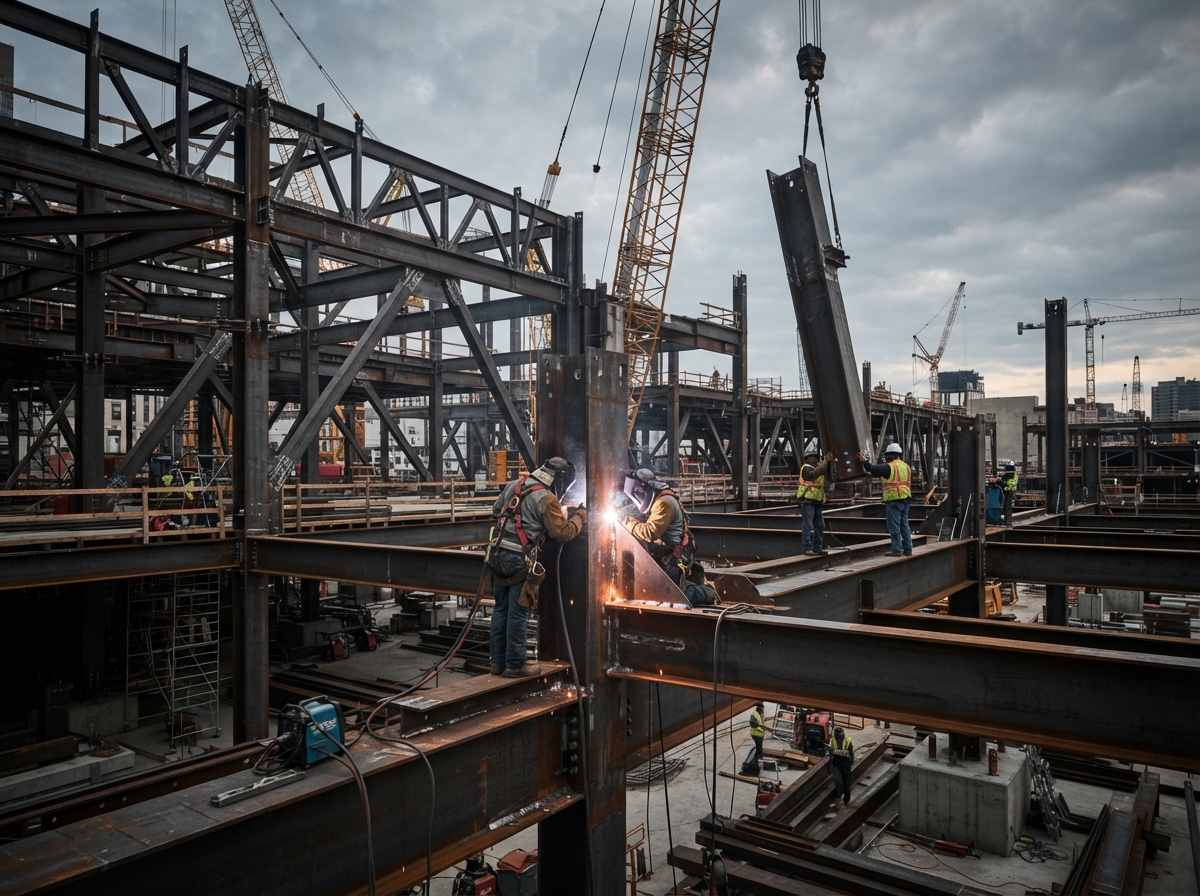
Consider what a structural weld does. A steel beam welded to a column carries the weight of everything above it — floors, walls, roof, contents, and people. The weld is the connection that transfers load from the beam to the column. If that weld is undersized, contains defects, or was not properly executed, the connection may fail under load. In a structural context, that is not just a quality issue — it is a safety issue.
This is why structural welding requires experience and attention to detail. The welder must understand the requirements of the joint, prepare the material properly, execute the weld with correct technique, and inspect the finished work. Each step matters, and skipping any of them can lead to a connection that does not perform as intended.
For projects that require stamped engineering, the engineer's specifications define the weld requirements — size, type, and inspection criteria. The welder's job is to execute the work to those specifications. If engineering is required, coordinate with a licensed engineer and provide their specifications to the welder.
Common Structural Welding Applications
Structural welding appears across a wide range of projects. In residential construction, it includes steel beams for floor and roof support, structural frames for additions and modifications, and reinforcement of existing structural elements. Many residential projects in South Florida involve steel framing for roof structures, particularly for homes designed to withstand high winds.
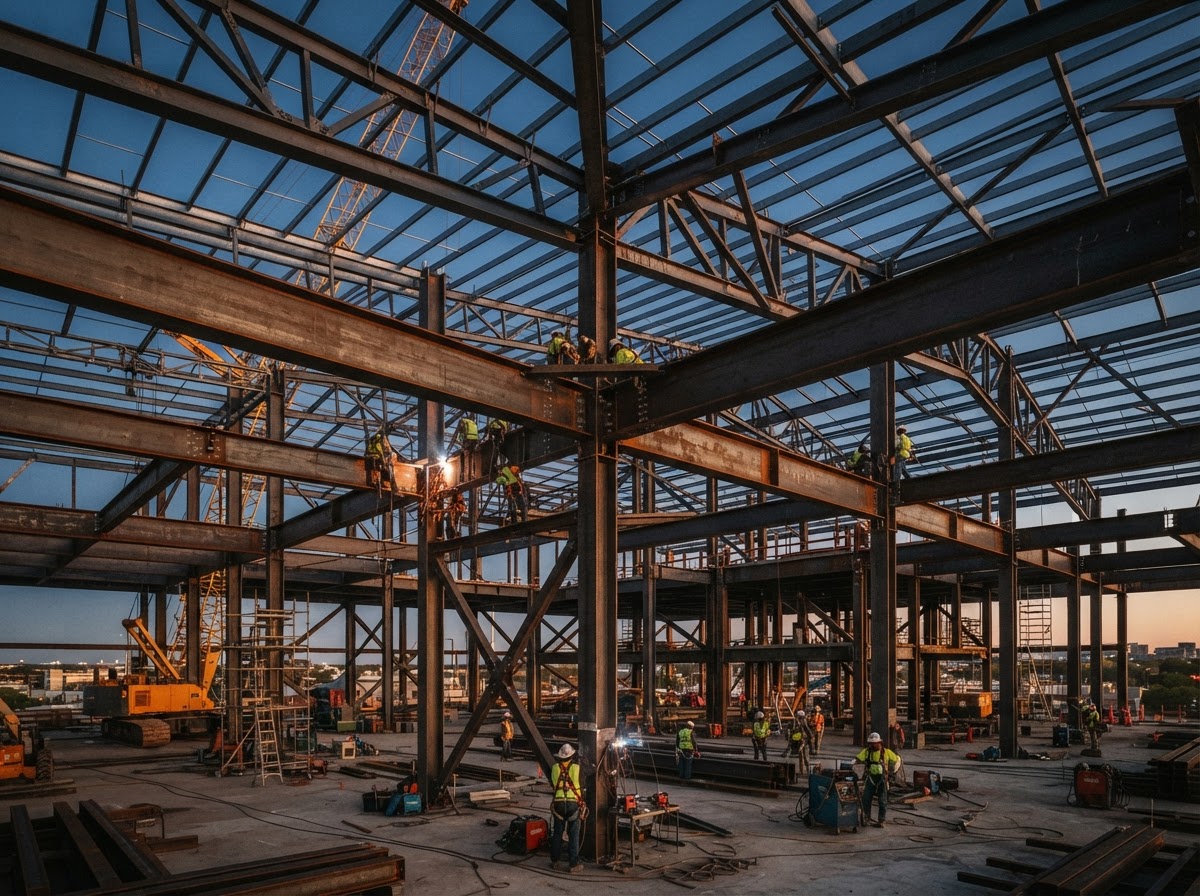
In commercial construction, structural welding is even more prevalent. Steel frameworks for commercial buildings, structural supports for mezzanines and platforms, connections for metal building systems, and structural modifications during renovations all require structural welding. Commercial projects often involve larger steel sections, more complex connections, and stricter code requirements.
In industrial applications, structural welding handles the heaviest and most demanding work. Industrial structures — platforms, equipment supports, access structures, and heavy frames — require welding that can withstand significant loads, vibration, and harsh conditions. The welding must be not only strong but also durable enough to perform reliably in demanding environments.
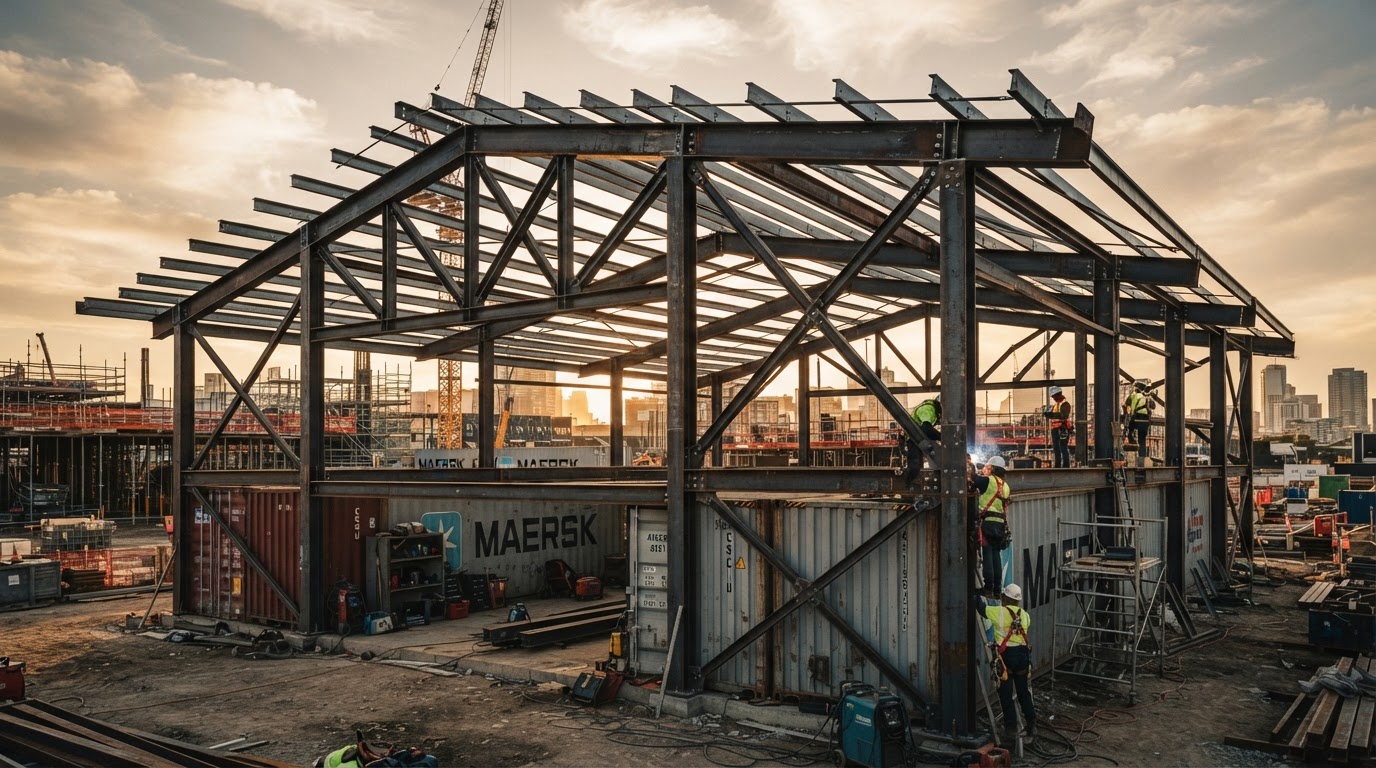
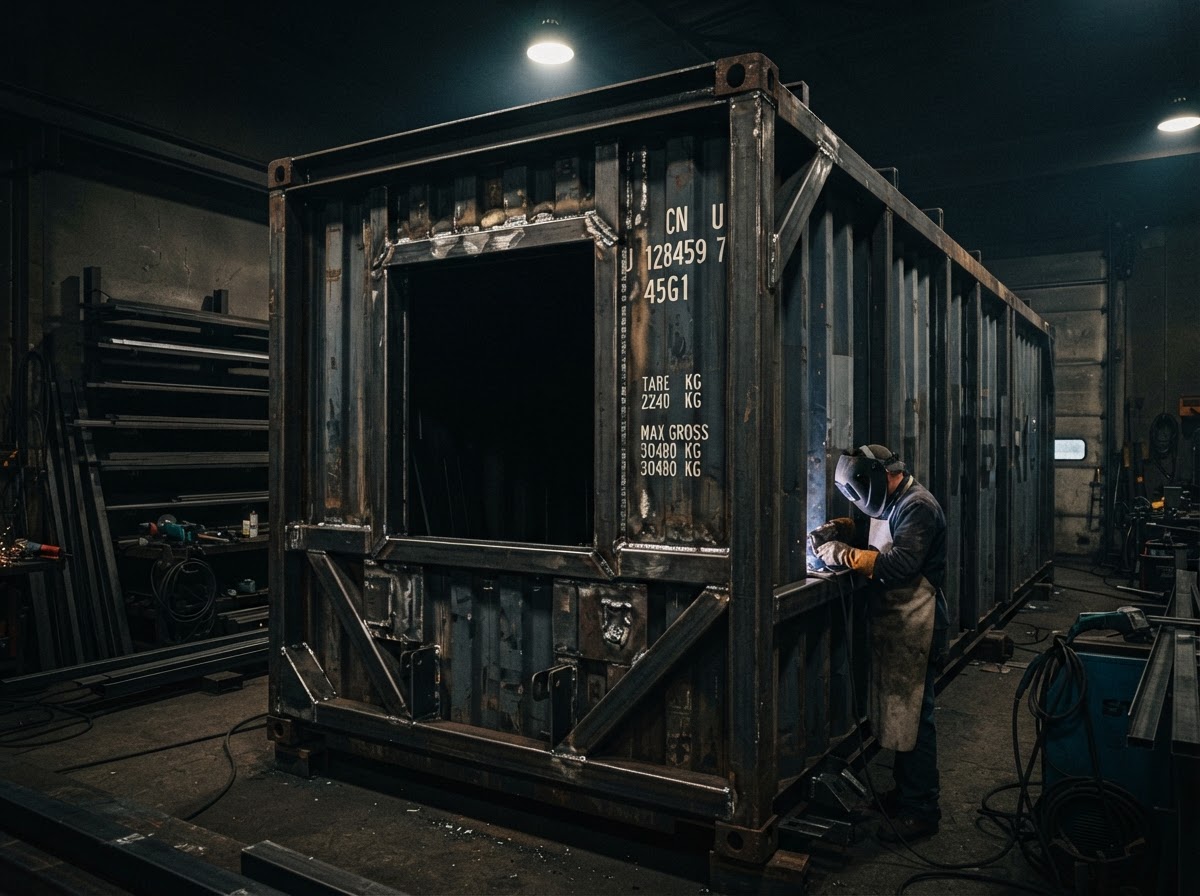
Container modifications represent another structural welding application. When shipping containers are modified — openings cut, walls removed, containers stacked — the original structure changes. Structural welding restores and reinforces the container to maintain its structural integrity. This includes welding reinforcement around cut openings, framing doors and windows, and reinforcing for stacking or load-bearing applications.
Types of Structural Welded Connections
Structural welding involves several types of connections, each with its own requirements. The most common types include butt joints, tee joints, lap joints, and corner joints. Each type of joint requires specific preparation and welding technique.
Butt joints connect two pieces of metal edge to edge. For full-penetration structural welds, the edges are beveled to create a groove that the welder fills with weld metal. This type of joint is common in beam splices and plate connections where full strength through the joint is required.
Tee joints connect two pieces at a 90-degree angle, forming a T shape. This is one of the most common structural connections — a beam welded to a column, a brace welded to a frame member. The weld is typically a fillet weld that fills the corner where the two pieces meet.
Lap joints overlap two pieces of metal and weld along the edge. This type of connection is common in structural framing where members overlap and are welded together. The weld is a fillet weld along the edge of the overlapping piece.
Corner joints connect two pieces at a corner, similar to a tee joint but with the pieces forming an L rather than a T. This type of connection is common in frame construction and structural boxes.
Each type of connection requires proper preparation — beveling, cleaning, and fit-up — and proper execution — correct weld size, penetration, and technique. A professional structural welder understands the requirements of each joint type and executes them accordingly.
Weld Preparation for Structural Work
Preparation is particularly critical in structural welding. The material must be cut to the correct dimensions, edges beveled where full penetration is required, and surfaces cleaned of rust, paint, oil, and other contaminants. Fit-up — the alignment and gap between the pieces being joined — must be within tolerance.
For structural connections, the gap between pieces matters. Too much gap and the weld may not fill properly; too little and penetration may be incomplete. The alignment affects how loads transfer through the connection. If pieces are misaligned, the weld may be subjected to loads it was not designed for.
Tack welding is used to hold the pieces in position before the final weld is made. Tack welds must be properly executed — they become part of the finished weld and any defects in them can affect the final connection. A professional welder ensures tack welds are clean, properly fused, and correctly placed.
For field welding — welding done on-site rather than in a shop — preparation is more challenging. Conditions are less controlled, access may be limited, and weather can affect the work. A professional structural welder brings the experience and equipment needed to prepare and weld structural connections in the field.
Inspection and Quality Assurance
Structural welds should be inspected to verify they meet the specified requirements. The level of inspection depends on the project. For some projects, visual inspection by the welder is sufficient. For others — particularly those governed by building codes — formal inspection by a qualified inspector is required.
Visual inspection checks weld size, length, appearance, and surface condition. The inspector looks for cracks, undercut, excessive convexity, porosity, and other visible defects. For welds that require deeper inspection, non-destructive testing methods like ultrasonic testing (UT) or radiographic testing (RT) can detect internal defects that are not visible on the surface.
If defects are found during inspection, they must be repaired. The defective weld is ground out and re-welded, then re-inspected. This process adds time and cost to the project, which is why getting the weld right the first time is always the goal.
At Micha Solution Welding, we inspect our own work as part of the process. We look for signs of problems and address them before the work is completed. If your project requires formal inspection, we work to the specifications provided and coordinate with the inspector to ensure the work meets all requirements.
Why Experience Matters in Structural Welding
Structural welding is not a place to cut corners or work with inexperienced welders. The consequences of a failed structural weld can be severe — property damage, safety hazards, and costly repairs. Experience matters because it brings the judgment to evaluate each connection, the skill to execute it properly, and the knowledge to recognize and address problems.
With 15 years of experience, Micha Solution Welding has worked on a wide range of structural projects across Hialeah and South Florida. We understand the requirements of structural connections, the importance of proper preparation and technique, and the need for quality work that performs reliably under real-world conditions.
If you have a structural welding project — whether it is a residential steel frame, a commercial structural modification, or an industrial structural build — contact us for a free estimate. We will evaluate the project individually, discuss the requirements, and provide welding built around what the structure actually needs.
Frequently Asked Questions
What makes structural welding different from other types of welding?
Structural welding joins load-bearing steel components — beams, columns, frames, and supports. The welds must carry significant loads and meet specific code requirements for size, penetration, and quality. The stakes are higher because a failed structural weld can compromise an entire building.
Does structural welding need to be inspected?
For many structural projects, yes. Building codes and project specifications may require visual inspection or advanced testing like ultrasonic or radiographic inspection. If your project requires inspection, coordinate with the appropriate inspector and ensure the welder is aware of the requirements.
Can structural welding be done on-site?
Yes. Many structural welding projects require on-site work because the steel is already installed or too large to transport. Mobile welding brings the equipment and expertise to the project location.
Have a Welding Project in Mind?
Tell us what you need and get a personalized estimate — or call us directly.