Why Reinforcement and Stacking Matter
Shipping containers are engineered to carry loads in specific ways — through their corrugated walls, corner posts, and the corner castings that allow them to be stacked. When you modify a container — cutting openings, removing walls, or stacking for multi-level structures — you change how loads flow through the structure. Without proper reinforcement and welding, these modifications can compromise the container's integrity, leading to flexing, sagging, or even structural failure.
At Micha Solution Welding in Hialeah, Florida, container reinforcement and stacking are among the structural welding services we provide. With 15 years of experience, we understand the structural considerations and welding requirements that modified and stacked containers demand. This guide covers the essentials of container reinforcement and stacking from a welding perspective.
Whether you are modifying a single container or building a multi-level container structure, understanding the reinforcement and stacking requirements helps ensure the project is safe and built to last.
Reinforcement for Wall Openings
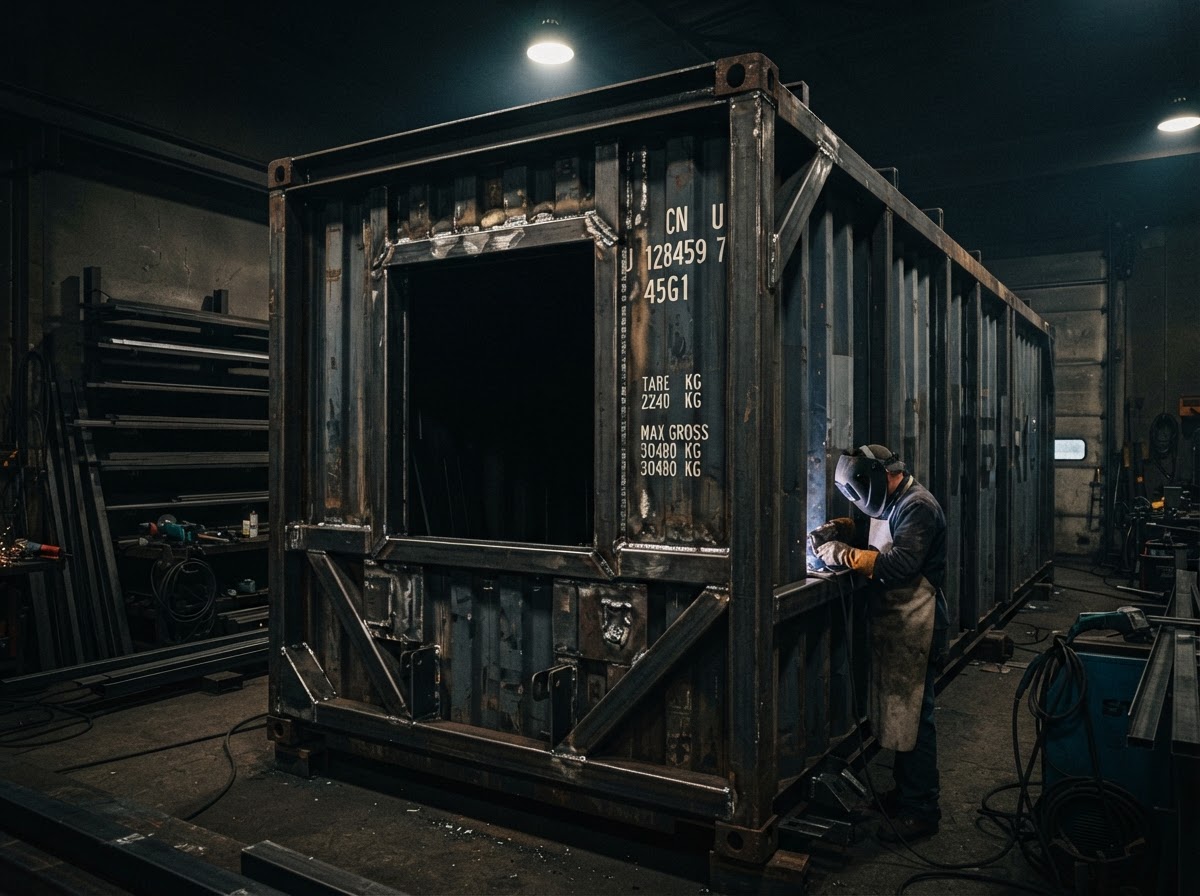
Wall openings are the most common modification that requires reinforcement. When you cut a hole in a container wall — for a door, window, or pass-through — you remove structural material. The corrugated wall of a container is not just a surface; it is a structural element that contributes to the container's rigidity and load-carrying capacity. Removing a portion of the wall creates a weak point that must be reinforced.
The standard method for reinforcing a wall opening is to weld a steel frame around the perimeter. The frame is typically made from square or rectangular steel tubing, cut to fit the opening and welded to the container wall. The frame restores the structural integrity by providing a rigid boundary that carries the loads the removed wall material would have carried.
The frame must be properly designed for the opening. A larger opening requires a heavier frame. An opening near a corner or edge of the container may require different reinforcement than one in the middle of a wall. The frame must be properly welded to the container — the welds must have adequate size and penetration to transfer loads from the frame to the container structure.
After the frame is welded, the opening is ready for a door, window, or other element. The frame provides a mounting point and ensures the opening maintains its shape and structural integrity over time. Without the frame, the opening would flex and sag, making it difficult or impossible to install and operate doors and windows properly.
Reinforcement for Wall Removal
Wall removal is a more significant modification than creating an opening. When an entire wall is removed — typically to connect adjacent containers or create an open interior space — the structural contribution of the entire wall is eliminated. This requires more extensive reinforcement than framing an opening.
When a wall is removed, new structural members must be installed to carry the loads the wall previously carried. This typically involves steel beams or frames that span the length of the removed wall, welded to the remaining container structure. The beams must be sized to carry the loads — the weight of the roof, wind loads, and any other applicable forces — and properly connected to the container.
The connections are critical. The new beams must be welded to the container's remaining structural elements — the corner posts, the floor, and the roof frame. These connections must be strong enough to transfer the loads from the beams to the container structure. A professional structural welder designs and executes these connections to ensure they are adequate.
Wall removal also affects the container's resistance to racking — the lateral deformation that occurs when a structure is subjected to lateral forces, such as wind. The corrugated walls of a container provide significant racking resistance. When a wall is removed, that resistance is reduced, and additional bracing may be needed to restore it.
Stacking: Structural Considerations
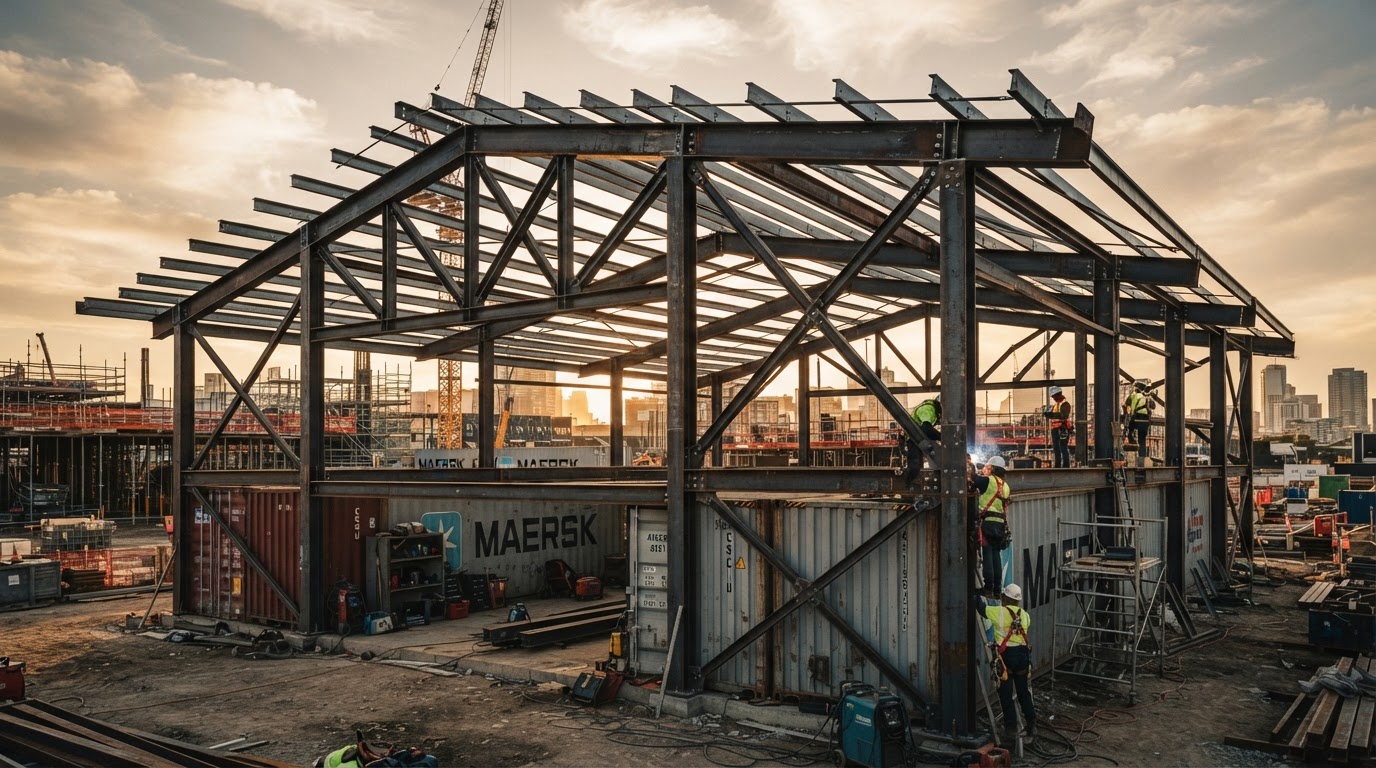
Stacking containers to create multi-level structures is a common practice, but it requires careful structural consideration. When containers are stacked, the lower containers must carry the weight of the upper containers and their contents. The corner posts are designed for this — they are the primary load-bearing elements of a container — but the overall condition of the container and the stacking configuration must be evaluated.
The corner castings — the standardized cast steel blocks at each corner of the container — are designed to carry the stacking loads. When containers are stacked, the corner castings of the upper container sit on the corner castings of the lower container. For temporary or storage stacking, this may be sufficient. For permanent structures, the containers should be welded together at the corner castings to create a monolithic connection.
The welding of stacked containers must be performed after the containers are properly positioned and aligned. The corner castings are prepared — cleaned of paint and surface material — and welded together. The welding must create a strong connection that holds the containers in alignment and transfers loads properly. For multi-level structures, engineering is typically required to verify the stacking configuration is safe.
Stacking may also require reinforcement of the lower containers. If the upper containers will carry significant loads — furniture, equipment, occupants — the lower containers must be capable of carrying those loads in addition to their own weight. The container condition, the stacking configuration, and the intended loads must all be evaluated.
Welding Requirements for Container Reinforcement
The welding for container reinforcement must meet specific requirements to ensure the connections are strong and durable. The welding process, technique, and quality all matter.
The most common welding process for container reinforcement is Stick welding (SMAW), which is well-suited for field conditions and handles the thickness of container steel. Flux-cored welding may also be used. The process is selected based on the material thickness, position, and conditions.
Surface preparation is critical. Container walls are typically painted or coated, and this coating must be removed from the weld area before welding. Welding through paint or coating produces poor-quality welds with porosity and contamination. The surface should be cleaned to bare metal in the weld area.
The welds must be properly sized and executed. For frame connections, the welds must be large enough to transfer the loads between the frame and the container. For stacking connections, the welds must be strong enough to hold the containers together and resist the forces they will experience. A professional welder understands these requirements and produces welds that meet them.
After welding, the welds and the surrounding area should be protected from corrosion. In South Florida's salt-air environment, unprotected welds will rust quickly. A protective coating — primer and paint, or a more durable coating system — should be applied to all welded areas.
Common Reinforcement and Stacking Mistakes
Several common mistakes can compromise the integrity of modified or stacked containers. Understanding these mistakes helps you avoid them and ensure your project is safe.
The most common mistake is cutting openings without proper reinforcement. This is often done to save time or money, but the result is a weakened container that may flex, sag, or fail. Every opening, regardless of size, should be properly framed with welded steel.
Another common mistake is using undersized reinforcement. A frame that is too small or too light for the opening will not adequately restore the structural integrity. The reinforcement must be sized for the opening and the loads involved.
For stacking, a common mistake is simply placing containers on top of each other without welding the connections. While this may be acceptable for temporary storage, it is not adequate for permanent structures. Unwelded containers can shift, settle, or be displaced by wind. The connections must be welded to create a single, stable structure.
Another stacking mistake is not evaluating the load capacity of the lower containers. If the upper containers will carry significant loads, the lower containers must be capable of supporting those loads. This is particularly important for containers that have been modified — a container with a removed wall has less load capacity than an intact one.
Finally, neglecting corrosion protection is a common mistake. Welded areas are particularly vulnerable to rust, and in South Florida's environment, unprotected welds will deteriorate. All welded areas should be properly coated.
Planning Your Reinforcement or Stacking Project
If you are planning a container reinforcement or stacking project, start by defining the modifications and the intended use. What openings are needed? Are walls being removed? Will containers be stacked? What loads will the structure carry?
For permanent structures, engineering is typically required to verify the structural integrity of the modifications and the stacking configuration. Work with a structural engineer who can evaluate the containers, the modifications, and the loads, and specify the reinforcement and connections needed.
Contact Micha Solution Welding for the structural welding. Based in Hialeah, Florida, we serve clients across South Florida with 15 years of experience in container reinforcement and stacking. Share your project requirements and engineering specifications, and we will evaluate the project, plan the work, and provide a personalized quote. From single-container modifications to multi-level container structures, we deliver the structural welding that ensures your container project is safe, strong, and built to last.
Frequently Asked Questions
What happens if you cut a container opening without reinforcement?
Without reinforcement, the container will lose structural integrity at the opening. The walls may flex, the opening may sag, and doors or windows may not fit or operate properly. Over time, the unreinforced opening can lead to structural failure.
How are containers connected when stacked?
Stacked containers are typically connected by welding the corner castings together. Additional reinforcement may be added depending on the loads and the configuration. The welding must create a strong, monolithic connection that holds the containers together as a single structure.
Do stacked containers need engineering?
For permanent structures, yes. Stacking introduces additional loads and requires verification that the lower containers can carry the weight. Engineering ensures the stacking configuration is safe and meets building code requirements.
Have a Welding Project in Mind?
Tell us what you need and get a personalized estimate — or call us directly.