The Technical Side of Custom Railings
A custom metal railing may look simple from the outside — posts, rails, and infill assembled into a barrier. But the technical details behind that simplicity — the design decisions, the fabrication quality, the welding technique, the finish application, and the installation method — determine whether the railing will perform reliably for years or become a source of problems. Understanding these technical aspects helps property owners appreciate what goes into a quality railing and make informed decisions about their project.
At Micha Solution Welding in Hialeah, Florida, we handle every aspect of custom metal railing projects — design, fabrication, welding, finishing, and installation. With 15 years of experience serving residential, commercial, and industrial clients throughout Miami-Dade CountyMiami-Dade County, we understand how each technical decision affects the finished product and how to execute each step with the precision that custom metalwork demands.
This guide explores the technical considerations for custom metal railings, from design through installation. It is intended for property owners, contractors, and facility managers who want to understand the factors that determine railing quality and performance.
Design Engineering
Railing design is not just about appearance — it is about engineering. A railing must withstand specific loads, meet code requirements, and perform reliably over its service life. The design must account for the loads the railing will experience, the span between posts, the height of the railing, and the connections to the structure.
The primary load consideration for railings is lateral load — the force applied horizontally to the railing, such as a person leaning against it or falling against it. Building codes specify the minimum lateral load that a railing must withstand, typically 200 pounds for residential applications and more for commercial and industrial applications. The design must ensure that the railing, posts, and connections can all withstand this load without failing.
Post spacing is a critical design parameter. The distance between posts affects the strength of the railing — closer spacing means each post carries less load, while wider spacing means each post must be stronger. The appropriate post spacing depends on the railing height, the material, the post size, and the loads. For typical residential railings, post spacing of 4 to 6 feet is common. For commercial and industrial railings, the spacing may be different based on the requirements.
The connection between the railing and the structure is another critical design element. The posts must be anchored to the structure in a way that transfers the lateral loads to the structure. The anchoring method depends on the substrate — anchor bolts for concrete, welding for steel, through-bolts for wood. The design must specify the appropriate anchoring method and hardware for the specific installation.
At Micha Solution Welding, we design railings that meet the specific requirements of each project. We consider the loads, the span, the height, the connections, and the code requirements. For projects that require stamped engineering, we build to the engineer's specifications. For projects that do not require engineering, we apply our experience to design railings that meet or exceed applicable code requirements.
Fabrication Quality
Fabrication quality is what separates a well-designed railing from a well-built railing. The design may be perfect, but if the fabrication is sloppy — misaligned cuts, poor welds, inconsistent dimensions — the finished railing will not perform as intended. Quality fabrication requires precision, attention to detail, and proper technique at every step.
Cutting is the first fabrication step, and precision is essential. Each piece of the railing — posts, rails, infill bars, braces — must be cut to the correct length and angle. Errors in cutting compound through the fabrication process — a piece that is too long or too short affects the fit of the joints and the dimensions of the finished railing. At Micha Solution Welding, we cut each piece precisely and check the dimensions before proceeding.
Fitting is the next step — laying out the pieces in the railing's configuration to verify the dimensions and the fit of the joints. This step allows the fabricator to identify and correct any issues before welding begins. If a piece does not fit properly, it is re-cut or replaced. Fitting also includes preparing the joint surfaces — cleaning and beveling as needed for proper weld penetration.
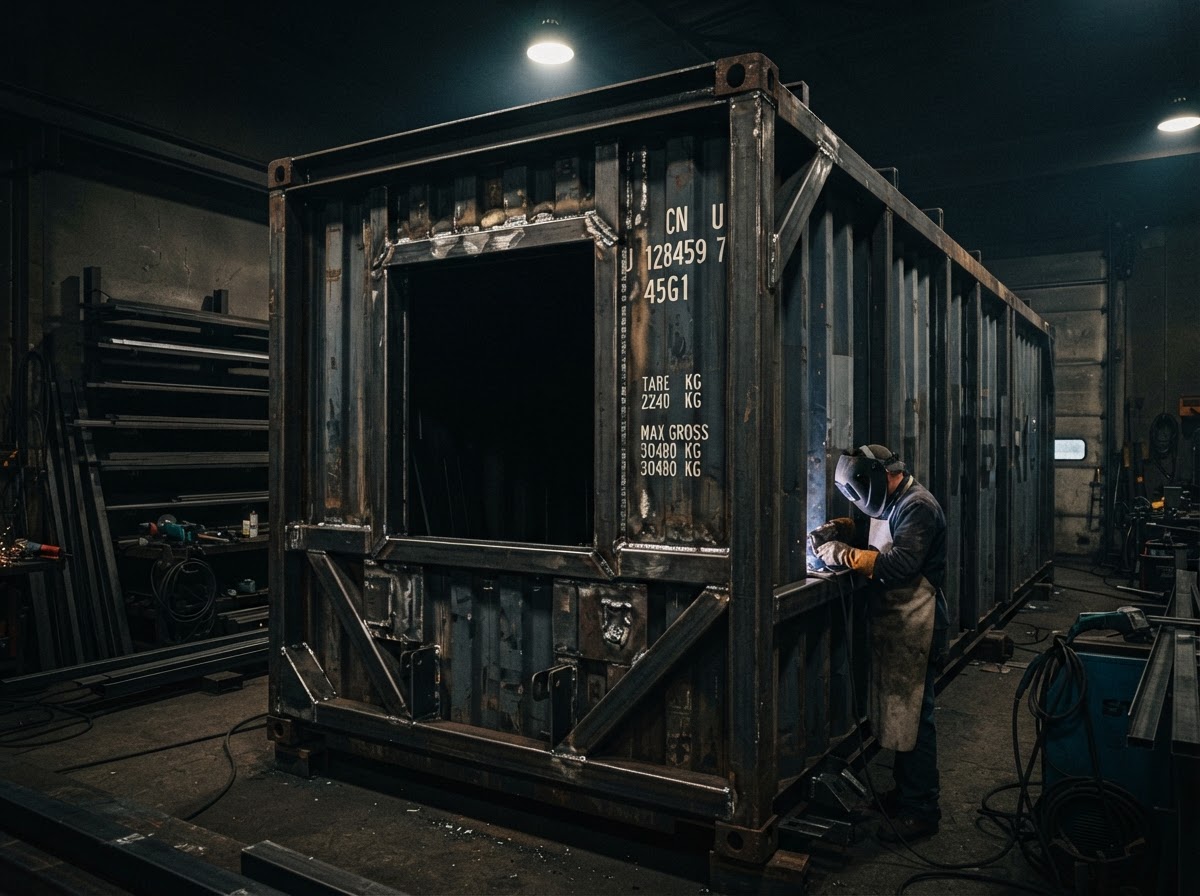
Welding is the most critical fabrication step. The welds are the connections that hold the railing together, and their quality directly affects the railing's strength and longevity. Welds must have proper penetration — fusion between the weld metal and the base metal — to be strong. They must be free of defects like cracks, porosity, and undercut. They must be the correct size for the joint. And they must be executed with proper technique to ensure soundness.
At Micha Solution Welding, we weld each connection with care. We use the appropriate welding process for the material and conditions, maintain correct parameters, and inspect our welds as we go. For railings, the welds at the post-to-rail connections and the infill-to-rail connections are particularly important because these are the points where the railing's loads are transferred. We ensure these welds are sound and adequate for the loads.
Welding Technique and Quality Control
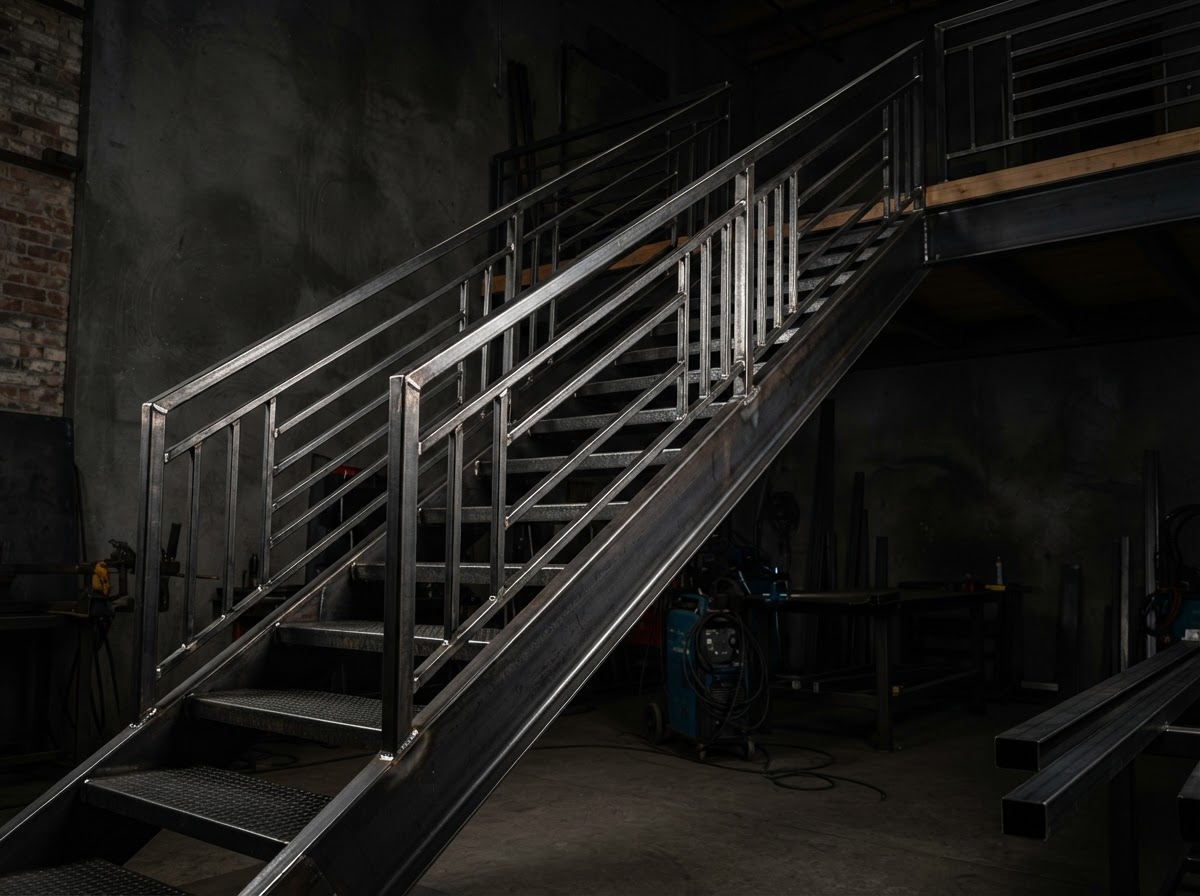
The welding technique used for railing fabrication affects both the strength and the appearance of the finished product. MIG welding is commonly used for railing fabrication in a shop environment because it produces clean welds efficiently and is suitable for the material thicknesses typically used in railings. TIG welding may be used for stainless steel or where exceptional weld appearance is required. Stick welding may be used for field repairs or modifications.
Regardless of the process, the welder must maintain the correct arc length, travel speed, and electrode angle to produce sound welds. Too long an arc causes porosity and lack of fusion. Too fast a travel speed produces a thin, weak weld. Too slow a travel speed produces excessive buildup. The correct technique produces a weld with proper penetration, adequate size, and a clean bead profile.
For multi-pass welds on thicker material, each pass must be cleaned before the next is applied. Slag, spatter, and contaminants from the previous pass can cause defects in the subsequent pass. Cleaning between passes is a standard practice that ensures the quality of multi-pass welds.
Quality control is an ongoing process throughout fabrication. The welder inspects each weld as it is completed, looking for signs of cracking, porosity, undercut, or other defects. If a defect is found, the weld is ground out and re-welded. This self-inspection is a critical part of producing quality railings — it catches problems before they become part of the finished product.
After fabrication is complete, the railing is checked for dimensions, squareness, and alignment. Any distortion from welding is corrected. The railing is compared to the design specifications to verify that it meets the requirements. Only after passing this final inspection is the railing ready for finishing and installation.
Finishing and Coating
After fabrication and inspection, the railing is finished. Finishing involves grinding welds smooth where needed, removing spatter, and preparing the surface for coating. The goal is a clean, professional appearance and a surface that will accept the protective coating properly.
Weld grinding is done with care. Welds that will be visible are ground smooth for appearance. Welds that are structural but hidden may be left as-is or lightly ground. Over-grinding can weaken welds, so the grinding is done judiciously — enough to create a clean appearance without compromising the weld's strength.
Surface preparation is critical for coating adhesion. The steel must be clean and free of rust, oil, mill scale, and other contaminants. This may involve wire brushing, grinding, sandblasting, or chemical cleaning, depending on the condition of the steel and the coating to be applied. Poor surface preparation is the most common cause of coating failure — even the best coating will not adhere to a dirty surface.
The coating is then applied. For paint, this typically involves a primer coat followed by one or more top coats. For powder coating, the railing is coated with powder and baked to cure the finish. For galvanizing, the railing is dipped in molten zinc. The coating method depends on the exposure conditions and the desired appearance. For South Florida's corrosive environment, the coating quality directly affects the railing's service life.
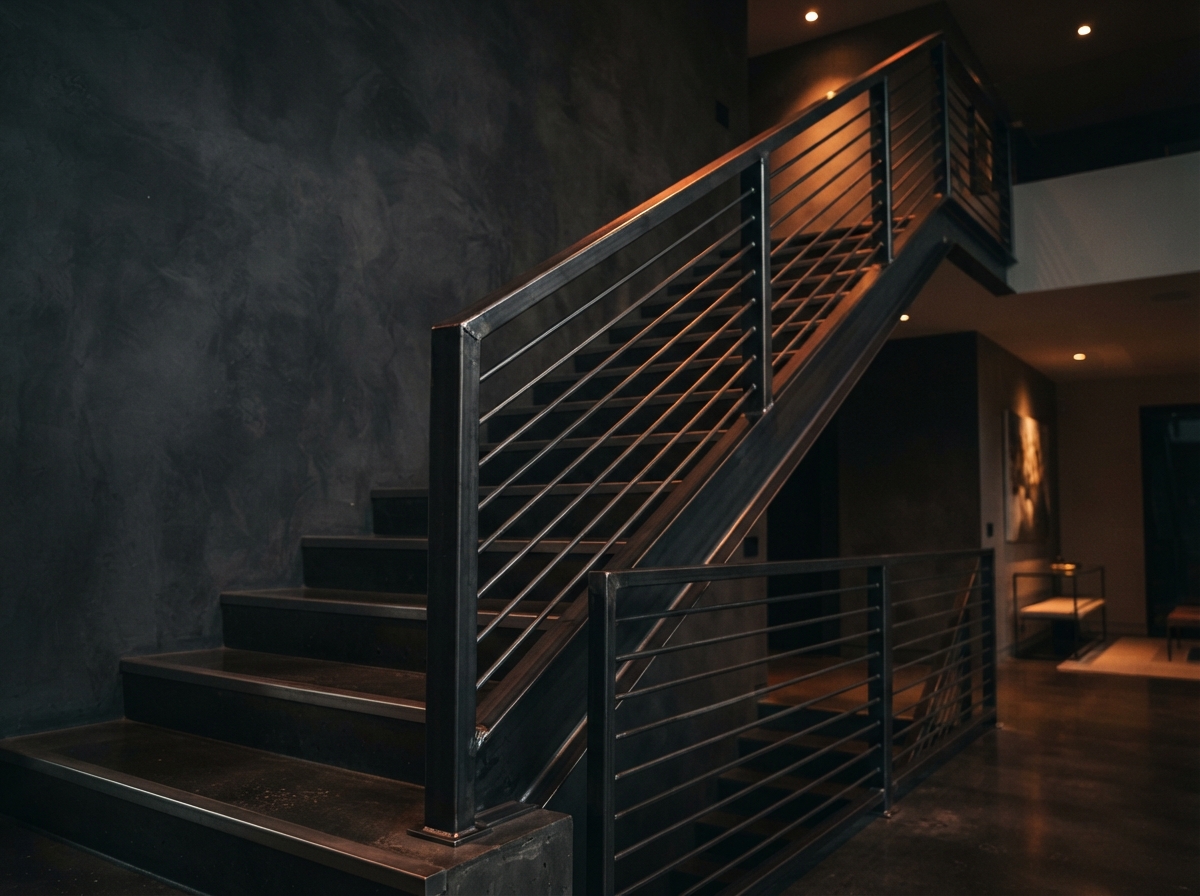
Powder coating is a popular choice for railings because it provides a durable, attractive finish that resists chipping, fading, and corrosion. The powder is electrostatically applied and then baked at high temperature, which causes it to flow and bond to the metal. The result is a smooth, even coating that is thicker and more durable than typical paint. Powder-coated railings can last for many years with minimal maintenance in South Florida's environment.
Installation Methods
Installation is the final step, and it is as important as the fabrication. A well-fabricated railing will not perform properly if it is installed incorrectly. The posts must be securely anchored, the rails must be level and properly aligned, and the connections must be adequate to transfer the loads to the structure.
For concrete installations, anchor bolts are typically used. The bolt size, embedment depth, and spacing depend on the loads and the concrete strength. The bolts must be properly installed — at the correct depth, properly torqued, and not over-tightened. The posts are attached to the bolts with base plates, and the connections must be tight and secure.
For steel installations, the posts can be welded directly to the steel structure. This provides the strongest connection but requires proper welding technique and access to the connection. The weld must be sound and adequate for the loads, and the steel must be properly prepared before welding.
For wood installations, through-bolts or heavy-duty lag bolts are used. Through-bolts provide the strongest connection because they pass completely through the wood and are tightened on both sides. Lag bolts are used when access to the back side is not possible. The bolt size and spacing depend on the loads and the wood type.
At Micha Solution Welding, we handle railing installation as part of the project. We evaluate the installation site, determine the appropriate anchoring method, and execute the installation with the same care that goes into the fabrication. This integrated approach ensures that the railing is installed correctly and performs as intended. With 15 years of experience serving Miami-Dade CountyMiami-Dade County, we bring the expertise needed to handle every aspect of custom metal railing projects.
If you are planning a railing project, contact us for a free estimate. Share the details — the application, the space, the design preferences, and any code requirements — and we will evaluate the requirements, plan the fabrication, and provide a personalized quote. Call (305) 515-0490 or request an estimate online. Based in Hialeah, Florida, we fabricate and install custom metal railings built around what your project actually needs.
Frequently Asked Questions
What welding process is used for metal railings?
MIG welding is commonly used for railing fabrication in a shop environment because it produces clean welds efficiently. TIG welding may be used for stainless steel or where exceptional weld appearance is required. Stick welding may be used for field repairs or modifications. The process is selected based on the material and requirements.
How are railing posts anchored to different surfaces?
Anchoring methods depend on the substrate. For concrete, anchor bolts are used. For steel, posts can be welded directly. For wood, through-bolts or heavy-duty lag bolts are used. The method is selected based on the substrate and the loads the railing must withstand.
What finish is best for outdoor metal railings in South Florida?
For South Florida's humid, salt-air environment, powder coating and galvanizing are both effective options. Powder coating provides a durable, attractive finish. Galvanizing provides maximum corrosion protection. The choice depends on the desired appearance and the exposure conditions.
Have a Welding Project in Mind?
Tell us what you need and get a personalized estimate — or call us directly.