Why Understanding Welding Processes Matters
If you are planning a welding project — whether it is a structural steel build, a custom fabrication, or a repair — understanding the different welding processes helps you make informed decisions. While you do not need to be a welder to hire one, knowing the basics of MIG, TIG, and Stick welding helps you understand why a professional recommends a particular approach for your project.
Each welding process has distinct characteristics that make it better suited for certain materials, thicknesses, positions, and environments. A professional welder chooses the process based on the specific requirements of the job, not on personal preference alone. At Micha Solution Welding in Hialeah, Florida, we work with multiple processes and select the right one for each project.
This guide explains the three most common welding processes in plain language, covering how each works, what it is used for, and when it is the right choice. Whether you are a homeowner planning a residential project or a contractor managing a commercial build, this information will help you understand the work being done on your project.
Stick Welding (SMAW)
Stick welding — formally known as Shielded Metal Arc Welding (SMAW) — is one of the oldest and most widely used welding processes. It uses a consumable electrode coated in flux. When the electrode touches the work piece, an electric arc forms that melts both the electrode and the base metal. As the flux coating burns, it creates a shielding gas that protects the molten weld pool from atmospheric contamination. The flux also forms a slag layer over the finished weld that must be chipped away after cooling.
Stick welding is known for its simplicity and ruggedness. The equipment is relatively straightforward — a power source, electrode holder, and ground clamp. There is no external shielding gas required, which makes Stick welding ideal for outdoor work where wind would blow away shielding gas used in other processes. It also handles rusty, dirty, or painted materials better than MIG or TIG, though cleaning is still recommended for best results.
Stick welding works well on thick materials and is commonly used in structural steel construction, heavy equipment repair, pipeline welding, and field fabrication. It can be used in all positions — flat, horizontal, vertical, and overhead — making it versatile for projects where the work cannot always be positioned ideally.
The limitations of Stick welding include slower deposition rates compared to MIG, the need to stop and change electrodes frequently (since each electrode is consumed), and the slag that must be removed between passes and after completion. Despite these limitations, Stick welding remains one of the most important processes in structural and field welding.
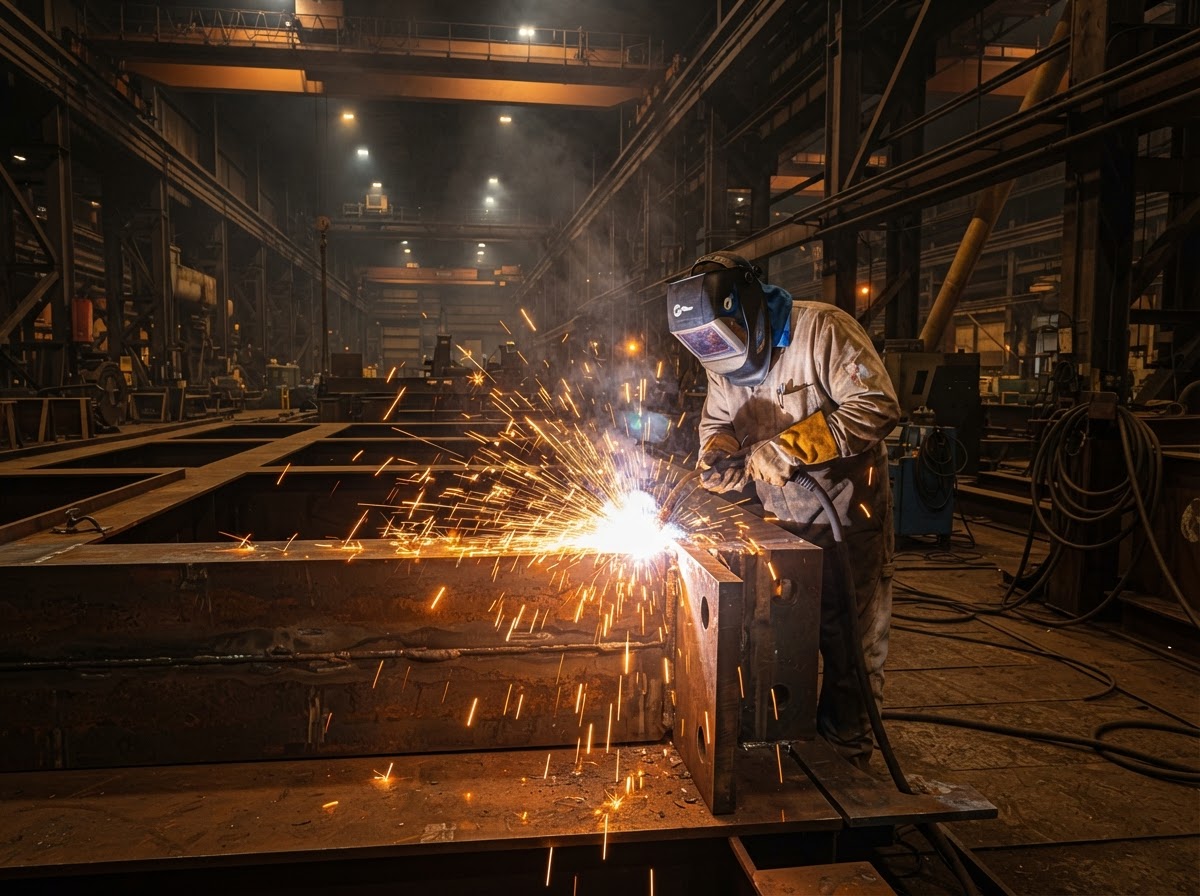
For structural welding projects in South Florida — steel beams, frames, supports, and bracing — Stick welding is often the process of choice, particularly for field work where conditions are not controlled. Its ability to produce strong, reliable welds in less-than-ideal conditions makes it indispensable for structural applications.
MIG Welding (GMAW)
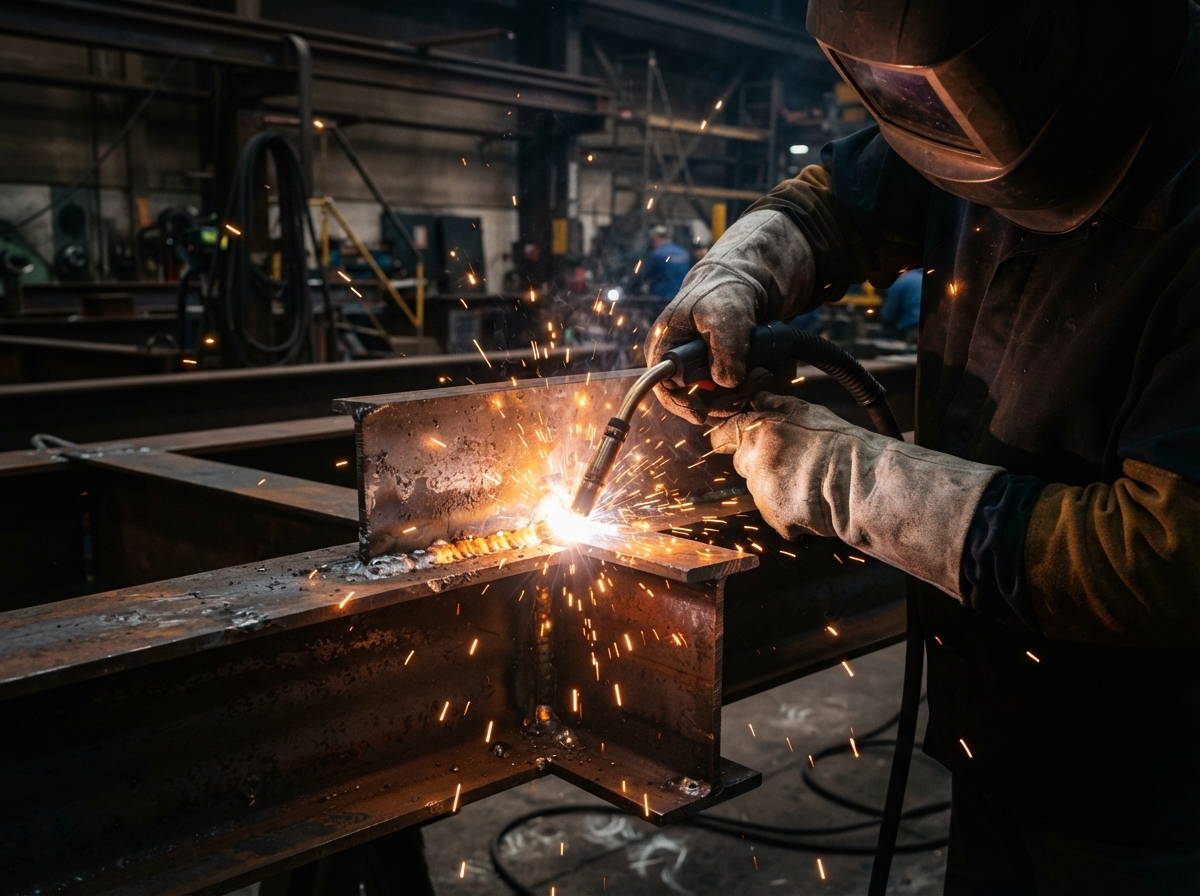
MIG welding — Gas Metal Arc Welding (GMAW) — uses a continuously fed wire electrode that serves as both the filler material and the electrical conductor. An inert or semi-inert gas flows through the welding gun to shield the weld pool from the atmosphere. The most common shielding gases are argon, carbon dioxide, or a mixture of the two, depending on the material and application.
MIG welding is known for its speed and productivity. Because the wire feeds continuously, the welder does not need to stop and change electrodes as with Stick welding. This makes MIG ideal for longer welds, production work, and projects where speed matters. The process also produces less spatter and no slag, resulting in cleaner welds that require less post-weld cleanup.
MIG welding works well on a range of material thicknesses, from thin sheet metal to moderate-thickness plate. It is commonly used in fabrication shops, manufacturing, automotive work, and lighter structural applications. The process is relatively easy to learn compared to TIG or Stick, which makes it popular for production environments.
The main limitation of MIG welding is its sensitivity to wind. Because it relies on external shielding gas, even moderate air movement can disrupt the shielding and cause porosity in the weld. This makes MIG less suitable for outdoor field work unless wind barriers are set up. MIG equipment is also more complex than Stick, requiring a wire feeder, gas supply, and regulator.
For fabrication projects in a controlled environment — custom brackets, structural components, and assemblies — MIG welding offers an excellent combination of speed, quality, and efficiency. At Micha Solution Welding, MIG is one of the processes we use for fabrication work where conditions allow.
TIG Welding (GTAW)
TIG welding — Gas Tungsten Arc Welding (GTAW) — uses a non-consumable tungsten electrode to create the arc. A separate filler rod is manually added to the weld pool by the welder. An inert gas, typically argon, shields the weld area. TIG welding offers the highest level of control and produces the highest-quality welds of the three processes.
TIG welding is the process of choice for stainless steel, aluminum, and other non-ferrous metals. It produces exceptionally clean welds with excellent appearance and precision. Because the heat input and filler addition are controlled independently — the welder controls the arc with one hand and feeds filler with the other — TIG allows for precise control of the weld pool, making it ideal for thin materials, root passes, and critical applications.
The trade-off is speed. TIG welding is significantly slower than MIG or Stick. It requires a high level of skill and coordination — managing the torch, filler rod, and foot pedal (which controls amperage) simultaneously. For production work or thick materials, TIG is often too slow to be practical. But for applications where weld quality, appearance, and precision are paramount, TIG is unmatched.
TIG welding is commonly used for stainless steel fabrication, aluminum work, pipe welding root passes, aerospace applications, and custom work where appearance matters. It is also used for welding thin materials where the heat control of MIG or Stick might burn through the metal.
Like MIG, TIG uses external shielding gas and is sensitive to wind. It is best suited for shop work or protected environments. For projects that require the precision and quality of TIG, the extra time and care are worth the investment.
Choosing the Right Process for Your Project
The choice of welding process depends on several factors: the material being welded, its thickness, the position of the weld, the environment (shop vs. field), the required weld quality, and the production speed needed. A professional welder evaluates all these factors when planning a project.
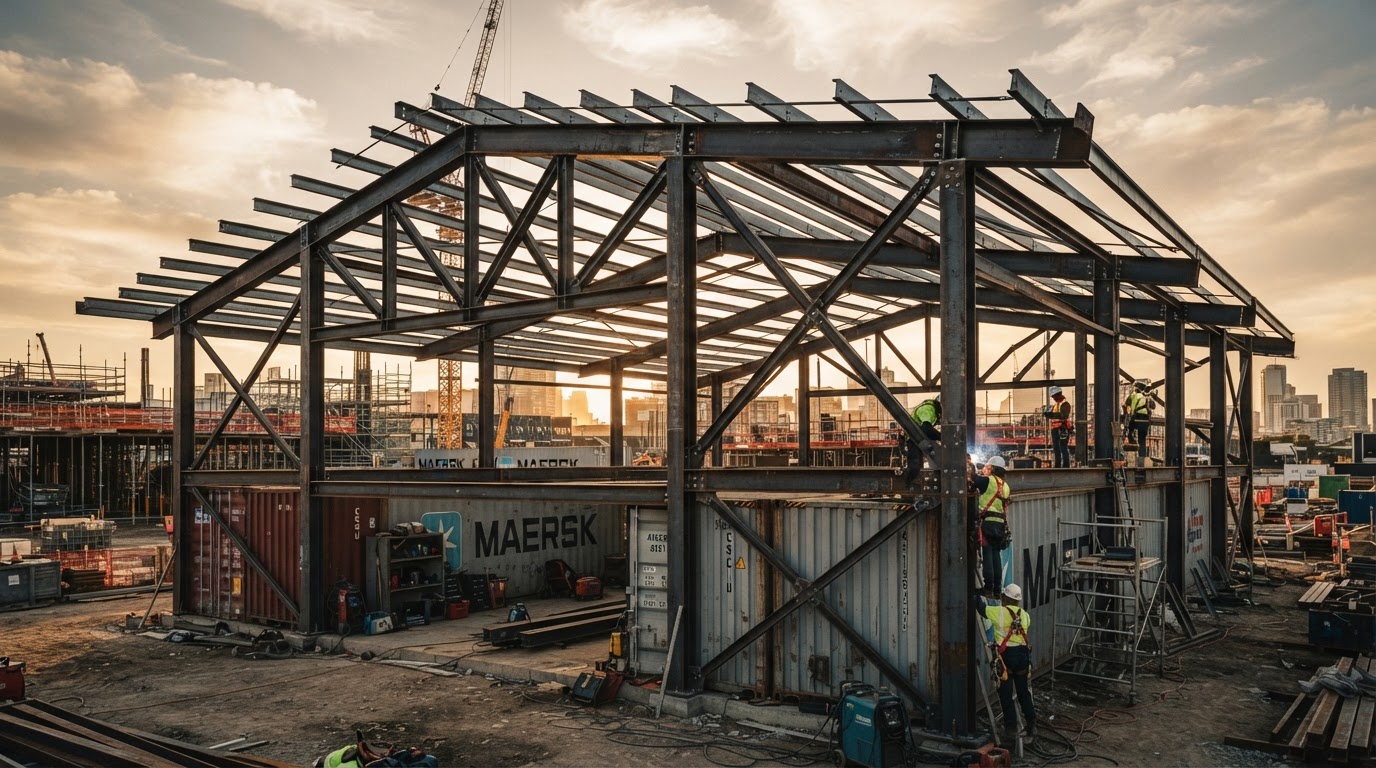
For structural steel work — beams, columns, frames, and supports — Stick welding is often the primary choice, especially for field work. It produces strong, reliable welds in all positions and handles the conditions encountered on construction sites. For shop fabrication of structural components, MIG may be used for speed and efficiency.
For custom fabrication — brackets, supports, assemblies, and custom components — MIG is often the go-to process in a shop environment. It offers a good balance of speed, quality, and efficiency for moderate-thickness materials. TIG may be used for components that require exceptional precision or are made of stainless steel or aluminum.
For repair welding in the field — fixing cracked steel, reinforcing existing structures, or repairing equipment — Stick welding is typically the most practical choice. Its versatility and ability to work in less-than-ideal conditions make it ideal for repair work.
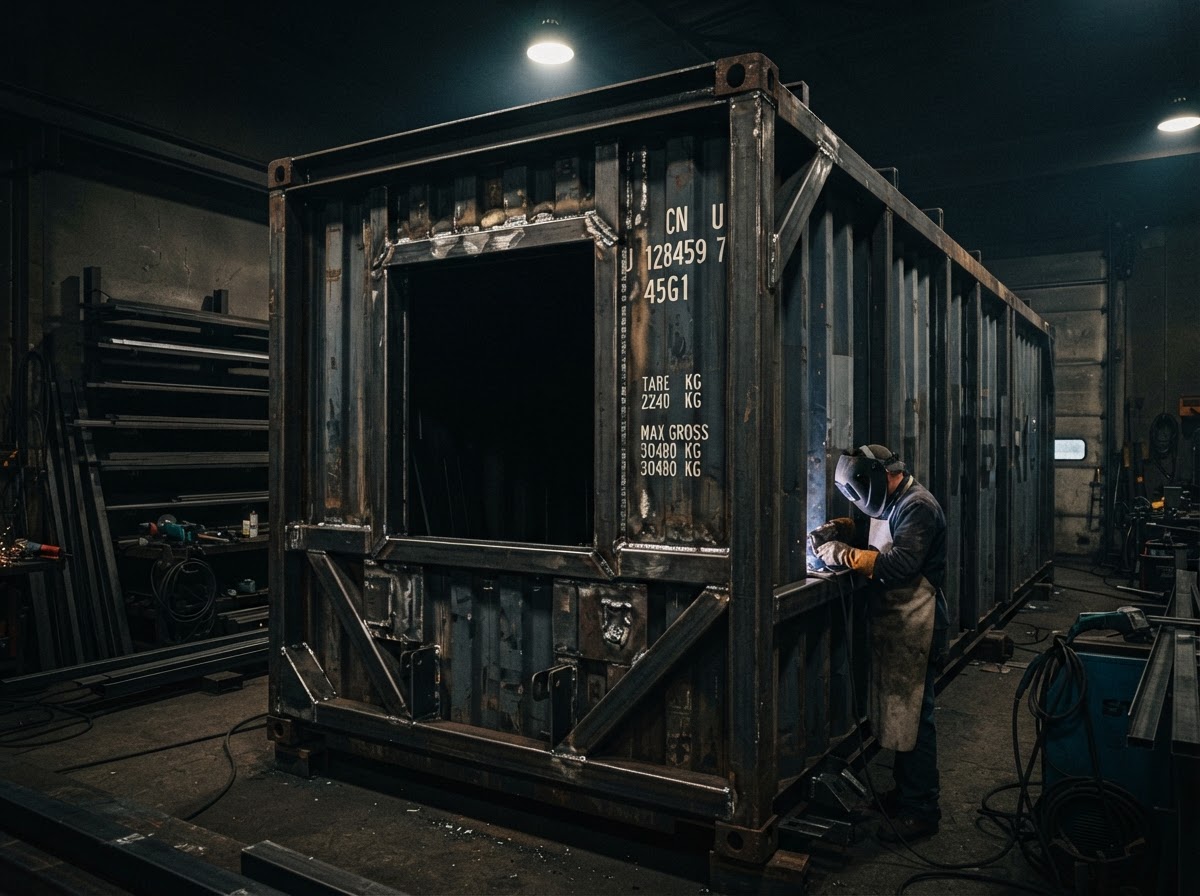
For container modifications — cutting openings, framing, and reinforcing shipping containers — a combination of processes may be used. Stick welding for structural reinforcement in the field, MIG for shop fabrication of frames and components, and potentially TIG for precision work where needed.
What This Means for Your Project
As a client, you do not need to specify which welding process to use — that is the welder's job. But understanding the basics helps you have a more informed conversation about your project and understand why certain approaches are recommended.
When you contact Micha Solution Welding about a project, we evaluate the requirements — material, thickness, position, environment, and performance needs — and recommend the right approach. Whether the work calls for Stick, MIG, TIG, or a combination, the goal is always the same: a strong, durable, properly executed weld that meets the demands of the application.
If you have a project in Hialeah or the surrounding South Florida area, reach out for a free estimate. Share the details — drawings, photos, measurements, or a description of what you need — and we will evaluate the project and provide a personalized quote. With 15 years of experience across residential, commercial, and industrial welding, we bring the right process and the right expertise to every job.
Frequently Asked Questions
Which welding process is best for structural steel?
Stick welding (SMAW) and flux-cored arc welding are commonly used for structural steel because they work well outdoors and handle thicker materials. The specific choice depends on the project requirements, material thickness, and position.
Is TIG welding better than MIG welding?
Neither is universally better. TIG produces higher-quality, more precise welds but is slower. MIG is faster and more productive for longer runs. The right choice depends on the material, application, and quality requirements of the specific project.
Can all three welding processes be used on-site?
Yes, but Stick welding is generally the most practical for field work because it does not require shielding gas, which can be disrupted by wind. MIG and TIG can be used on-site with proper wind protection.
Have a Welding Project in Mind?
Tell us what you need and get a personalized estimate — or call us directly.