The Role of a Professional Welder
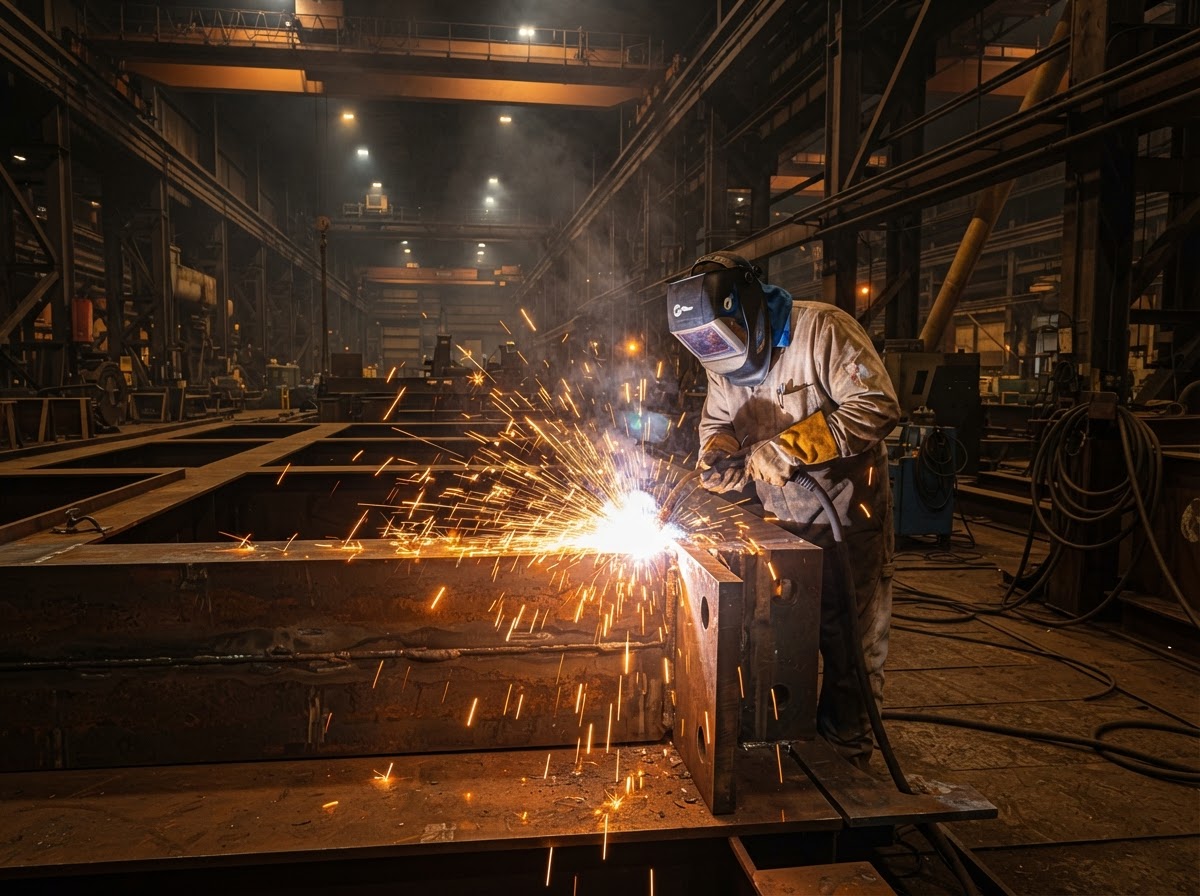
A professional welder joins metal components together using controlled heat, pressure, and filler material to create a bond that is often as strong as — or stronger than — the parent metal itself. The work sounds simple in description, but in practice it requires a deep understanding of metallurgy, joint design, heat control, and structural performance. A welder is not simply someone who melts metal together; they are a tradesperson who creates structural connections that buildings, equipment, and infrastructure depend on.
At Micha Solution Welding, the role extends beyond running a bead. It involves evaluating each project individually, understanding what the finished weld needs to accomplish, selecting the right approach for the materials and conditions involved, and executing the work with precision. Based in Hialeah, Florida, we serve residential, commercial, and industrial clients across South Florida with welding solutions tailored to the specific demands of each project.
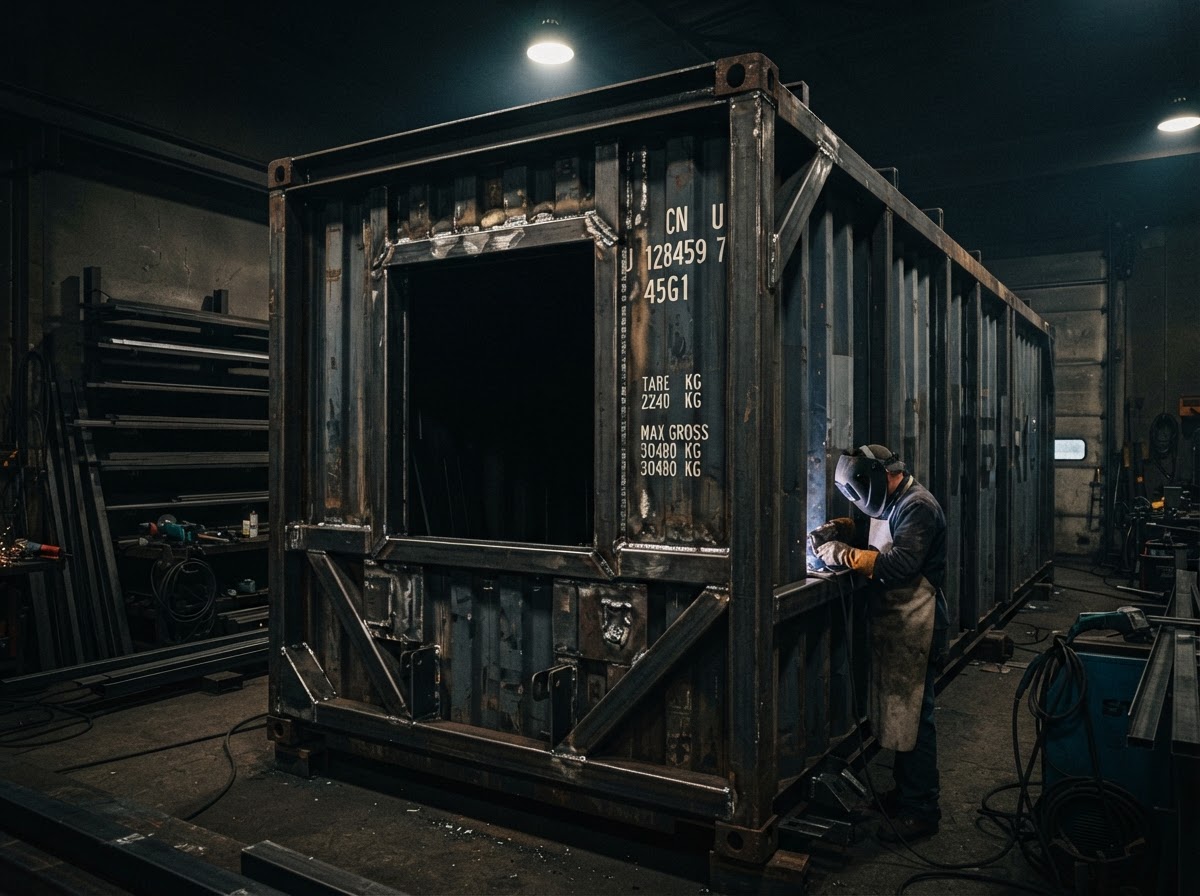
The day-to-day work of a professional welder varies enormously depending on the project. One day it might involve fabricating a custom steel staircase for a residential property. The next it could be reinforcing structural steel beams in a commercial building. Another day might bring container modifications — cutting framed openings and welding structural reinforcement into a shipping container being converted for storage or workspace. The common thread is that every project is evaluated on its own merits.
Types of Welding a Professional Handles
Professional welders work with several different welding processes, each suited to different materials, thicknesses, and applications. The most common processes include Stick welding (SMAW), MIG welding (GMAW), and TIG welding (GTAW). Each has its strengths, and a skilled welder knows when to use which.
Stick welding — Shielded Metal Arc Welding — is one of the oldest and most versatile welding processes. It uses a flux-coated electrode that creates its own shielding gas as it burns. Stick welding is rugged, works well outdoors, and handles dirty or rusty materials better than other processes. It is commonly used in construction, structural work, and repair welding in the field.
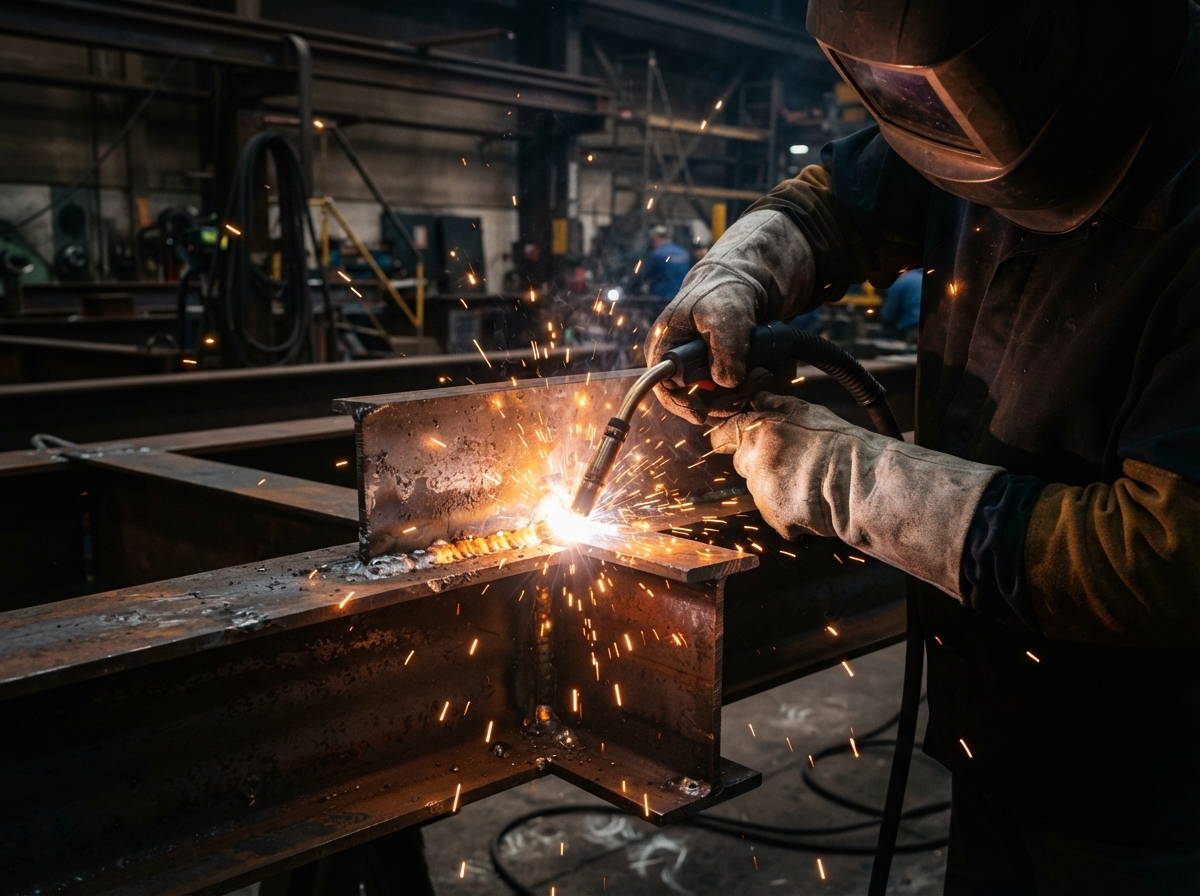
MIG welding — Gas Metal Arc Welding — feeds a continuous wire electrode through a gun while an inert gas shields the weld pool. MIG is fast, produces clean welds, and is well-suited to longer runs and production work. It is commonly used in fabrication shops and for thinner materials where speed and appearance matter.
TIG welding — Gas Tungsten Arc Welding — uses a non-consumable tungsten electrode and a separate filler rod. TIG produces the highest-quality, most precise welds and is often used for stainless steel, aluminum, and critical applications where weld appearance and precision are paramount. It is slower than MIG or Stick but offers unmatched control.
The choice of process depends on the material, the joint design, the position of the weld, the environment, and the performance requirements of the finished connection. A professional welder evaluates these factors for each project rather than defaulting to a single process.
Reading Drawings and Planning the Work
Before a welder strikes an arc, there is planning. Professional welders read and interpret drawings, blueprints, and specifications to understand what needs to be built. They identify the types of joints required, the dimensions and tolerances, the materials involved, and any specific welding requirements called out in the plans.
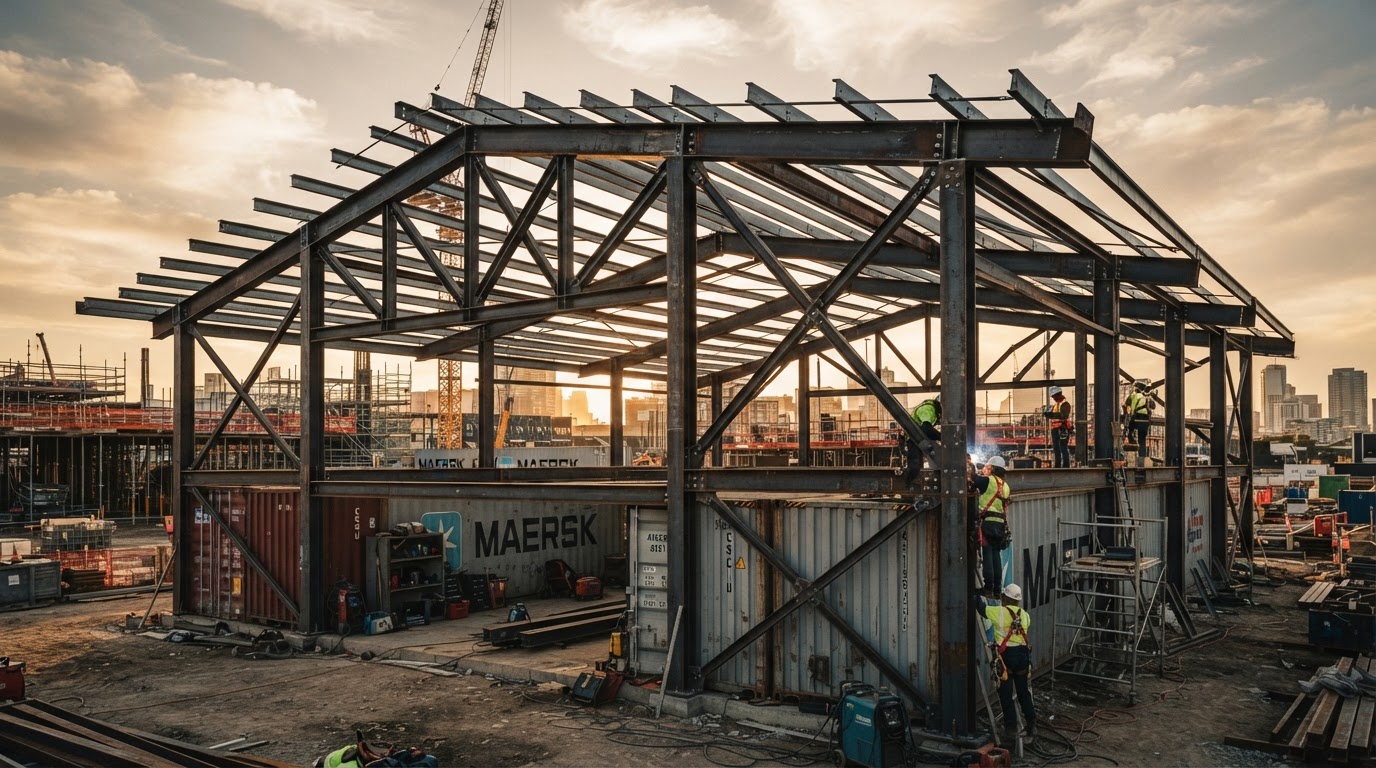
For structural projects, this planning phase is critical. A structural weld may need to meet specific code requirements for size, penetration, and length. The welder needs to understand what those requirements are before starting work. For custom fabrication projects, the planning phase involves figuring out how to cut, fit, and assemble the components so the finished piece matches the design.
At Micha Solution Welding, we encourage clients to share drawings, measurements, photos, or samples whenever possible. The more information we have upfront, the more accurately we can plan the work and provide a meaningful estimate. Even a rough sketch with dimensions can make a significant difference in how smoothly a project goes.
Material Preparation and Fit-Up
Welding is only as good as the preparation that precedes it. A critical part of what a professional welder does involves preparing the material — cutting it to size, cleaning surfaces, beveling edges for full penetration, and fitting components together so the joint is properly aligned before welding begins.
Fit-up is one of the most important factors in weld quality. If two pieces of steel are not properly aligned, if there is too much or too little gap between them, or if the edges are not properly prepared, the resulting weld will be weaker and potentially compromised. A professional welder takes the time to get the fit-up right before striking an arc.
Material preparation also includes removing rust, paint, oil, and other contaminants from the weld area. These contaminants can cause porosity, inclusions, and other defects that weaken the weld. In structural applications, this step is particularly important because the integrity of the connection depends on it.
For mobile welding projects, preparation can be more challenging because conditions in the field are rarely as controlled as they are in a shop. A professional welder brings the equipment and experience needed to prepare materials properly even in less-than-ideal conditions.
Executing the Weld
Once the material is prepared and fit up, the actual welding begins. The welder sets the machine to the correct parameters for the material thickness, process, and position. They maintain the correct arc length, travel speed, and electrode angle to produce a sound weld with proper penetration and bead profile.
For multi-pass welds — common in structural work — the welder deposits multiple layers of weld metal, cleaning each pass before applying the next. This builds up the weld to the required size and ensures full penetration through the joint. Each pass must be properly executed and cleaned, because defects in an earlier layer can compromise the entire weld.
Position matters too. Flat welding — where the weld is deposited on a horizontal surface with gravity helping — is the easiest and most productive position. But many projects require welding overhead, vertical, or in other positions where gravity works against the weld pool. A professional welder has the skill to produce sound welds in all positions.
Throughout the process, the welder monitors the weld pool, adjusts technique as needed, and watches for signs of problems. Experience is what allows a professional to recognize when something is going wrong and make corrections before the weld is completed.
Inspection and Quality Control
After the weld is completed, it should be inspected. For structural work, this may involve visual inspection of weld size, length, and appearance, as well as checking for surface defects like cracks, undercut, or porosity. For critical applications, more advanced inspection methods like ultrasonic testing or radiographic testing may be required.
A professional welder inspects their own work as a matter of course. They look for signs of cracking, incomplete penetration, excessive spatter, undercut, or other issues that could affect the performance of the connection. If a defect is found, the welder grinds it out and re-welds the affected area.
Quality control is not just about the finished weld — it is about the entire process. From material selection and preparation to fit-up, welding technique, and post-weld inspection, each step contributes to the quality of the final result. This is why experience matters so much in welding. A welder with 15 years of experience has seen what works and what does not, and has developed the judgment to produce reliable results consistently.
Mobile Welding: Bringing the Work to You
One of the most valuable services a professional welder can offer is mobile welding — bringing the equipment and expertise to the project location. This is essential for projects where the metalwork is already installed, too large to transport, or part of a structure that cannot be moved.
Micha Solution Welding offers mobile, on-site welding throughout Hialeah and surrounding South Florida communities. Mobile welding is practical for structural repairs, reinforcement of existing structures, on-site fabrication, container modifications, and any project where transporting the work to a shop is not feasible.
Before scheduling mobile welding, it helps to consider access to the work area, available space, and power supply. Sharing photos or a description of the project allows us to assess whether on-site service is the right approach and to come prepared with the right equipment.
Mobile welding is not just a convenience — for many projects, it is the only practical option. A cracked steel beam in a building cannot be brought to a shop. A container that needs structural modification on-site cannot be easily moved. In these situations, a mobile welder is the solution.
When to Call a Professional Welder
There are many situations where calling a professional welder is the right decision. If you have a structural steel project — beams, frames, supports, or bracing — a welder with structural experience is essential. If you need custom metalwork fabricated to specific dimensions, a welder who also does fabrication can handle the entire process. If you have a damaged or broken metal component that needs repair, a welder can often restore it to full strength.
For residential property owners in Hialeah and South Florida, common reasons to call a welder include custom stairs, structural repairs, property improvements involving metalwork, and one-off fabrication projects. For commercial clients, typical needs include structural modifications, build-outs, equipment welding, and custom fabrication. For industrial clients, the needs often involve heavy structural work, equipment repair, and durable metalwork for demanding applications.
Whatever the project, the key is to communicate clearly what you need. Share drawings, photos, measurements, or samples. Describe the intended use and any performance requirements. The more information you provide, the better the welder can evaluate the project and deliver work that meets your needs.
If you have a welding project in mind — whether it is a small residential repair or a large structural build — reach out to Micha Solution Welding for a free estimate. With 15 years of experience serving Hialeah and South Florida, we evaluate each project individually and deliver welding built around what the work actually requires.
Frequently Asked Questions
What is the difference between a welder and a fabricator?
A welder joins metal components together using heat and filler material. A fabricator cuts, shapes, bends, and assembles metal into finished components — which may or may not include welding. Many professionals, including Micha Solution Welding, do both.
Do I need to hire a welder for small residential repairs?
If the repair involves joining or reinforcing metal — a broken gate hinge, a cracked steel bracket, a damaged railing — a welder can typically handle it efficiently. For very small jobs, mobile welding is often the most practical option.
Can a welder work with aluminum and stainless steel?
Many professional welders work with a range of metals including steel, aluminum, and stainless. The specific process and filler material change depending on the metal. Share your material requirements when requesting an estimate.
Have a Welding Project in Mind?
Tell us what you need and get a personalized estimate — or call us directly.