The Importance of Proper Installation
A roof beam is only as good as its installation. Even the highest-quality steel beam, perfectly fabricated to the correct dimensions, will not perform as intended if it is installed improperly. Proper installation — correct positioning, alignment, connection, and welding — is what ensures the beam carries its design loads safely and reliably for the life of the structure.
At Micha Solution Welding in Hialeah, Florida, roof beam installation and welding are among the structural services we provide. With 15 years of experience, we understand the best practices that ensure a quality installation. This guide covers the key practices for roof beam installation and welding, from preparation to inspection.
Whether you are a contractor managing a structural project or a property owner trying to understand the work being done, this information provides a foundation for understanding what goes into a proper roof beam installation.
Preparation Before Installation
Preparation is the foundation of a successful installation. Before the beams are placed, the supporting structure must be prepared to receive them. This includes verifying that the support locations are correct, that bearing surfaces are level and properly sized, and that any anchor bolts or connection plates are correctly positioned.
For new construction, the supports — columns, walls, or other structural elements — are built to the dimensions specified in the plans. The beam locations, elevations, and connection details should be verified before the beams are delivered. Any discrepancies should be addressed before installation begins.
For modifications to existing structures, preparation may involve evaluating the existing construction, preparing bearing surfaces, and installing connection hardware. The existing structure must be capable of carrying the loads that the new beam will transfer to it. If reinforcement is needed, it should be done before the beam is installed.
The beams themselves should be inspected before installation. Verify that the beam size, length, and any shop-welded connections match the specifications. Check for damage during transport — bends, dents, or surface damage that could affect performance. Any issues should be addressed before the beam is placed.
Positioning and Alignment
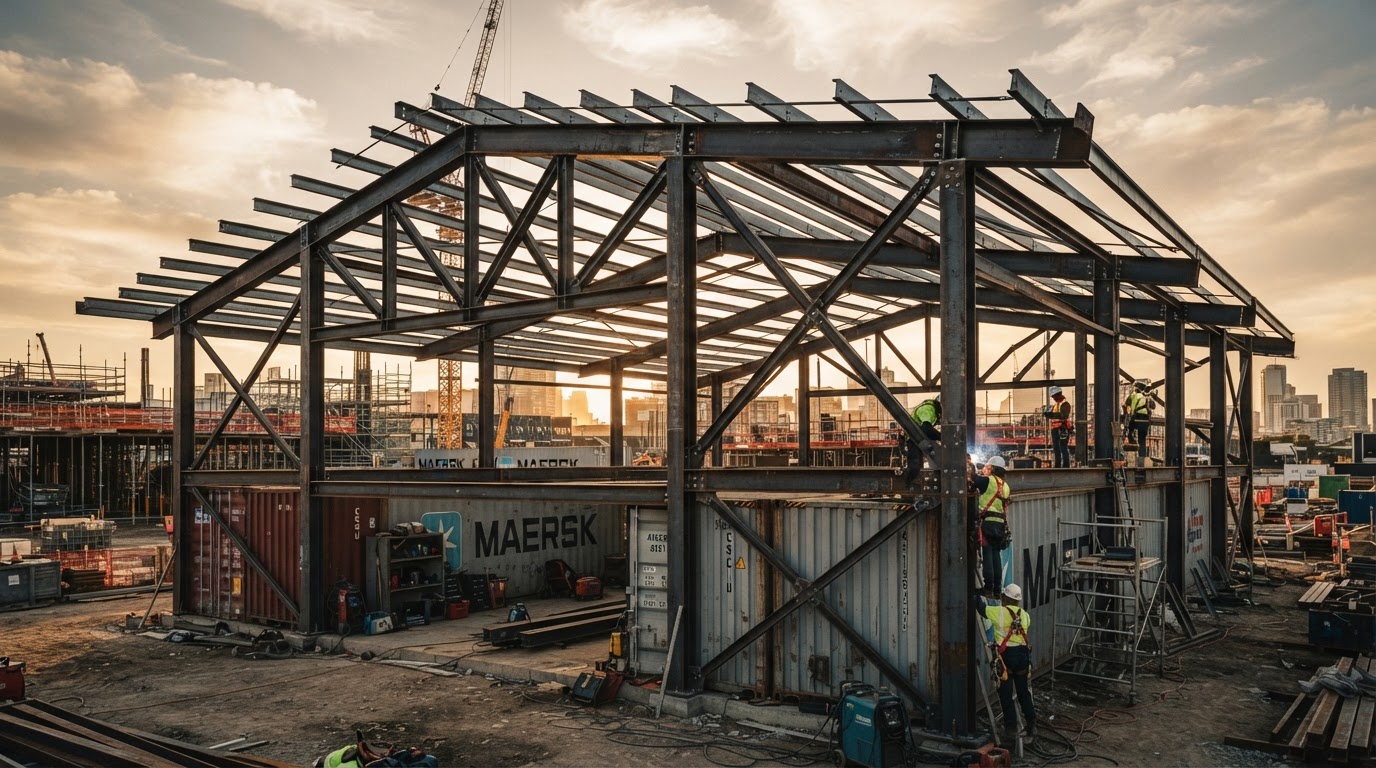
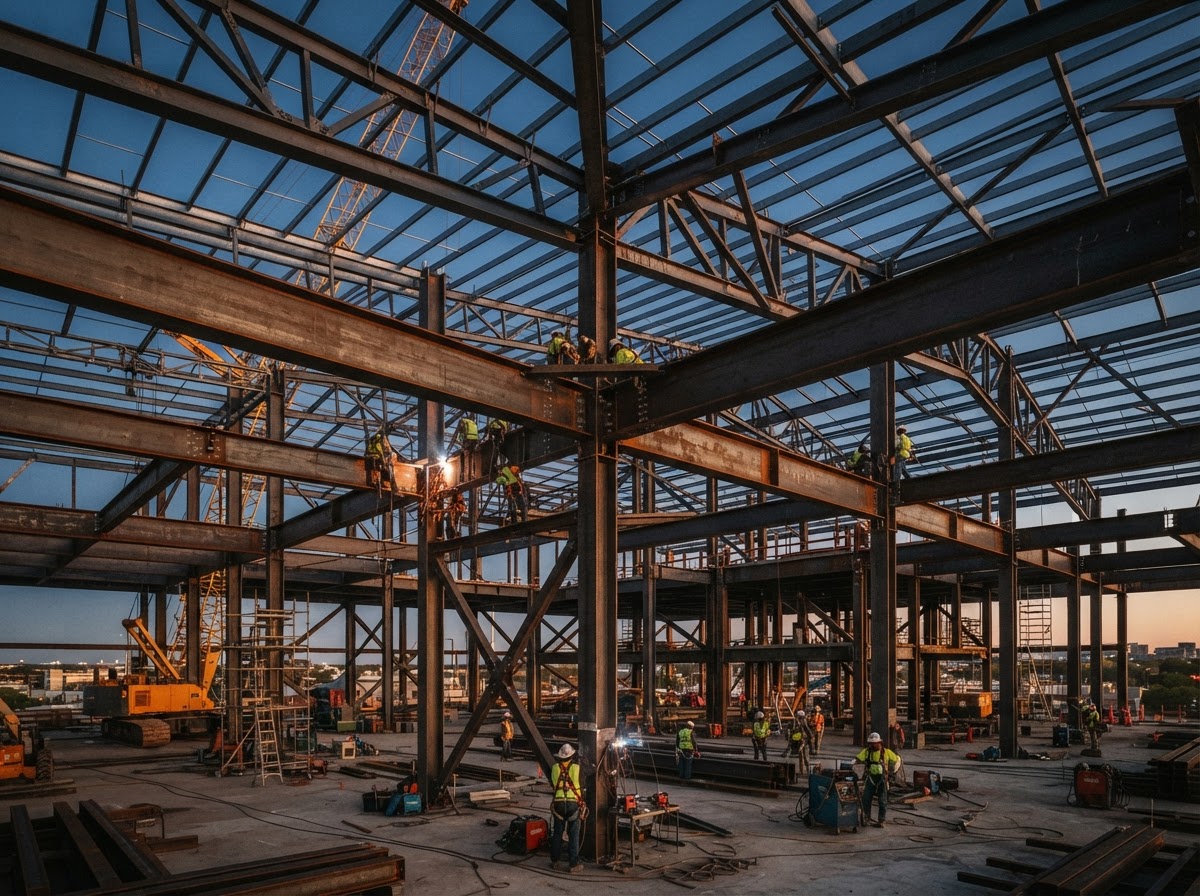
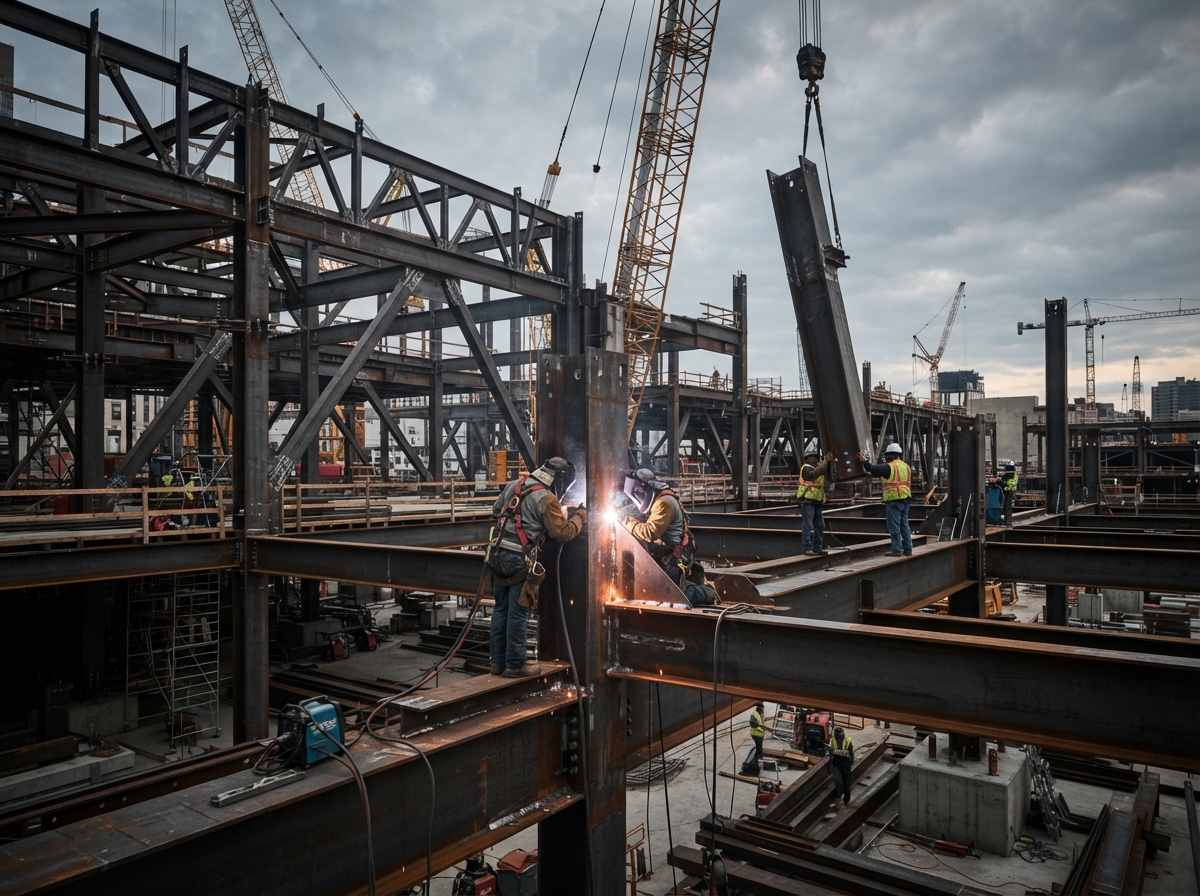
Once the supports are prepared, the beams are positioned. For large or heavy beams, lifting equipment — a crane, forklift, or hoist — is used to raise the beam into position. The beam is guided onto the bearing surfaces and aligned with the connection points.
Alignment is critical. The beam must be positioned at the correct location — both horizontally and vertically — as specified in the plans. The beam must be level (or at the correct slope, if the design calls for a slope), plumb, and properly oriented. Misalignment can create eccentric loads that the connection was not designed to handle.
For beams that connect to columns or other beams, the connection points must align. If a beam-to-column connection involves a welded or bolted connection, the beam and column must be positioned so the connection can be made as detailed. Shims may be used to adjust the position slightly, but significant misalignment should be corrected by repositioning the beam.
Temporary supports — shoring, bracing, or clamps — may be used to hold the beam in position while the permanent connections are made. These temporary supports must be adequate to carry the weight of the beam and any loads that will be placed on it before the permanent connections are completed.
Welded Connections for Roof Beams
Welded connections are commonly used for steel roof beams, particularly for beam-to-column connections and beam splices. A welded connection fuses the beam to its support, creating a continuous, monolithic joint that can carry significant loads.
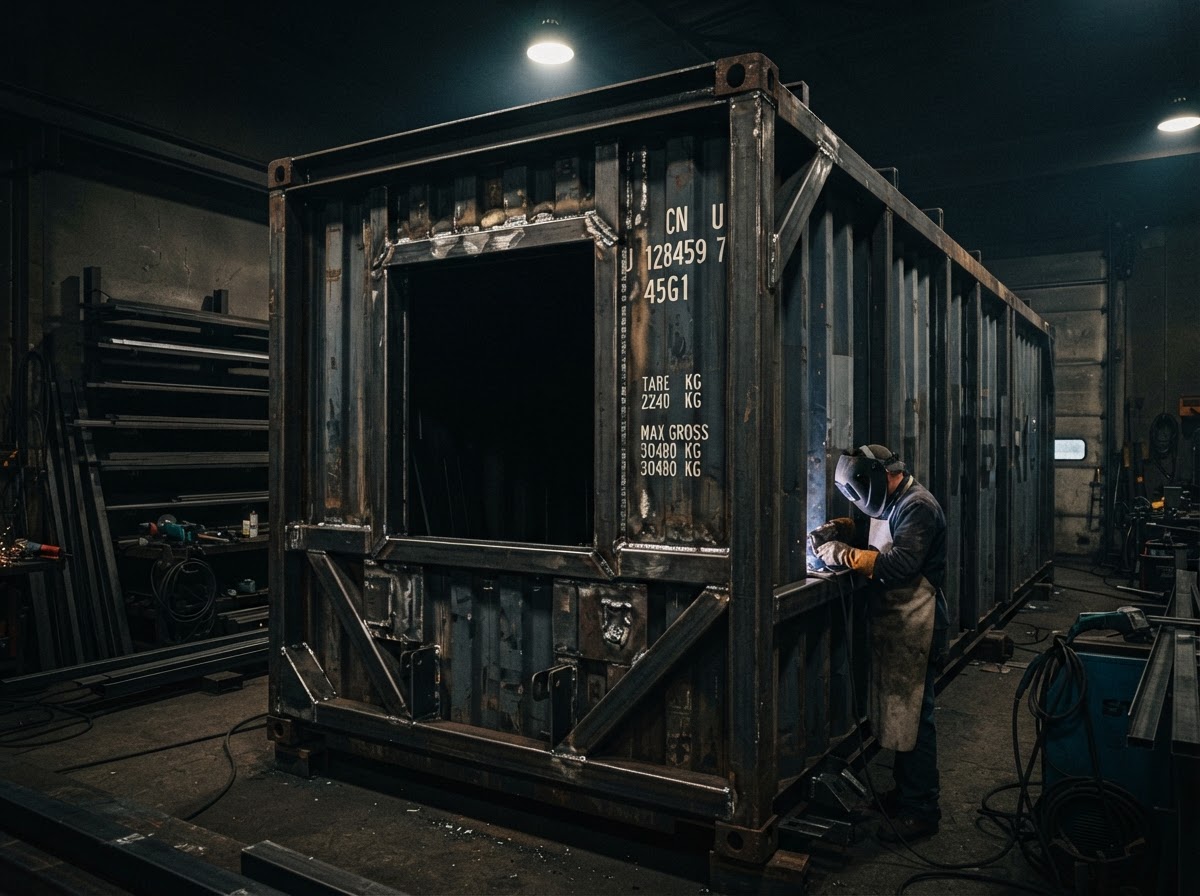
Before welding, the connection area must be prepared. Surfaces must be clean — free of rust, paint, oil, and moisture. For full-penetration welds, the edges must be beveled to create the proper groove. The fit-up — the gap and alignment between the pieces — must be within tolerance.
The welding process for structural connections typically uses Stick welding (SMAW) or flux-cored welding, which are well-suited for field conditions. The welder sets the machine to the correct parameters for the beam thickness, process, and position. For multi-pass welds, each pass is cleaned before the next is applied.
Proper technique is essential. The welder maintains the correct arc length, travel speed, and electrode angle to produce a sound weld with proper penetration and bead profile. For field welding, the conditions are less controlled than in a shop — wind, temperature, and access can all affect the work. A professional structural welder has the experience to produce quality welds in these conditions.
Preheating may be required for thicker materials or when the ambient temperature is low. Preheating the steel before welding reduces the temperature gradient, which helps prevent cracking. The preheat temperature and extent depend on the material thickness, the welding process, and the ambient conditions.
Bolted Connections
Bolted connections are an alternative to welded connections for some roof beam installations. High-strength bolts are used to connect steel elements, creating a strong, reliable connection that can be made more quickly than a welded connection and can be disassembled if needed.
For bolted connections, the bolt holes must be drilled or punched in the correct locations. The holes must be the right size — too large and the connection is loose; too small and the bolt will not fit. The beam and the support must be aligned so the holes match up. Drift pins or shims may be used to align the holes during installation.
High-strength bolts are installed and tightened to a specified tension. The tension creates a clamping force that holds the connection together and transfers load through friction between the connected surfaces. The bolt installation must follow the specified procedure — which may involve torque-controlled tightening or tension-indicating methods — to ensure the bolts are properly tensioned.
Bolted connections may be used alone or in combination with welded connections. For example, a beam may be bolted to a column with a welded connection plate. The choice depends on the engineering requirements, the loads, and the project conditions.
Inspection and Quality Assurance
After the beams are installed and the connections are made, the work should be inspected. For structural projects that require inspection, a building official or special inspector verifies that the installation meets the approved plans and the applicable code.
Inspection of welded connections may include visual inspection of weld size, length, and appearance, as well as non-destructive testing for critical connections. The inspector checks for defects — cracks, porosity, undercut, lack of fusion — that could affect the performance of the connection.
Inspection of bolted connections includes verifying bolt size and grade, checking that all bolts are installed and properly tightened, and verifying that the connection matches the detail drawings. For high-strength bolted connections, the inspector may verify the bolt tension using a torque wrench or other method.
Overall installation inspection verifies that the beams are in the correct locations, properly aligned, and adequately supported. The inspector checks the bearing conditions, the connections, and any other details specified in the plans.
At Micha Solution Welding, we inspect our own work as part of the process. We check alignment, weld quality, and connection integrity before considering the installation complete. If your project requires formal inspection, we work to the specifications and coordinate with the inspector.
Common Installation Challenges
Roof beam installation can present challenges that require experience to overcome. One common challenge is access — the beams may need to be lifted into position in a confined space, through an existing structure, or over obstacles. Planning the lift sequence and having the right equipment is essential.
Another challenge is tolerances. Steel is fabricated to precise dimensions, but the supporting structure — particularly in existing construction — may not be perfectly dimensioned. The installer must account for these discrepancies, using shims, adjustments, or modifications to ensure the beam fits and performs as intended.
Weather is a challenge for field welding. Wind can disrupt shielding gas, rain can make surfaces wet, and temperature can affect welding quality. A professional installer plans for weather, uses wind barriers, and schedules welding work during appropriate conditions.
At Micha Solution Welding, we have 15 years of experience overcoming these challenges. We plan the installation carefully, bring the right equipment, and adapt to site conditions to ensure a quality result. If you have a roof beam installation project, contact us for a free estimate.
Ensuring a Quality Installation
A quality roof beam installation is the result of careful preparation, proper positioning, sound connections, and thorough inspection. Each step matters, and skipping any of them can compromise the performance of the structure. With 15 years of experience serving Hialeah and South Florida, Micha Solution Welding delivers roof beam installations that meet structural requirements and perform reliably for the life of the building.
If you have a roof beam or steel framing project, contact us for a free estimate. Share your engineering specifications and project requirements, and we will evaluate the project, plan the installation, and provide a personalized quote. We bring the experience, equipment, and commitment to quality that structural work demands.
Frequently Asked Questions
How are steel roof beams connected to supporting structures?
Steel roof beams are connected to supporting columns or walls through welded connections, bolted connections, or a combination. The connection method depends on the engineering requirements and the loads involved. Welded connections provide a continuous, monolithic joint, while bolted connections allow for easier disassembly.
What is the purpose of preheating before welding steel beams?
Preheating the steel before welding reduces the temperature gradient between the weld area and the surrounding metal, which helps prevent cracking, particularly in thicker materials. It also helps drive off moisture that could cause hydrogen-induced cracking.
How long does roof beam installation take?
Timeline depends on the number of beams, the complexity of the connections, site access, and whether welding is performed on-site. A simple project may take a day; a complex project may take several days or weeks. We provide a timeline estimate with your quote.
Have a Welding Project in Mind?
Tell us what you need and get a personalized estimate — or call us directly.