The Choice Between Custom and Standard
When planning a project that involves metal components, one of the first decisions is whether to use mass-produced standard parts or invest in custom metal fabrication. The answer is not always obvious. Mass-produced parts are readily available, often less expensive per unit, and designed for common applications. Custom fabrication offers precise fit, tailored performance, and the ability to create components that simply do not exist as off-the-shelf products.
At Micha Solution Welding in Hialeah, Florida, we specialize in custom metal fabrication — cutting, shaping, fitting, and welding metal into finished components and structures built to specific project requirements. Over 15 years, we have worked with clients who needed both standard parts and custom solutions, and we have seen firsthand when each approach makes sense.
This guide compares custom metal fabrication to mass-produced parts across the factors that matter most — fit, performance, cost, timeline, and project suitability — to help you make an informed decision for your project.
Fit and Dimensional Accuracy
The most significant advantage of custom fabrication is fit. Mass-produced parts are manufactured to standard dimensions, which means they fit standard applications. But many projects involve non-standard dimensions, unique configurations, or specific requirements that standard parts cannot meet. In these cases, trying to adapt a standard part often results in a compromised solution — a part that almost fits, requires modification, or does not perform as intended.
Custom fabrication eliminates this problem. When a component is fabricated to your specific dimensions, it fits exactly. There is no need to modify the part, fill gaps, or compromise on the design. For structural applications where dimensional accuracy affects performance — a bracket that must carry a specific load, a frame that must fit within a defined space, or a component that must integrate with existing construction — precise fit is essential.
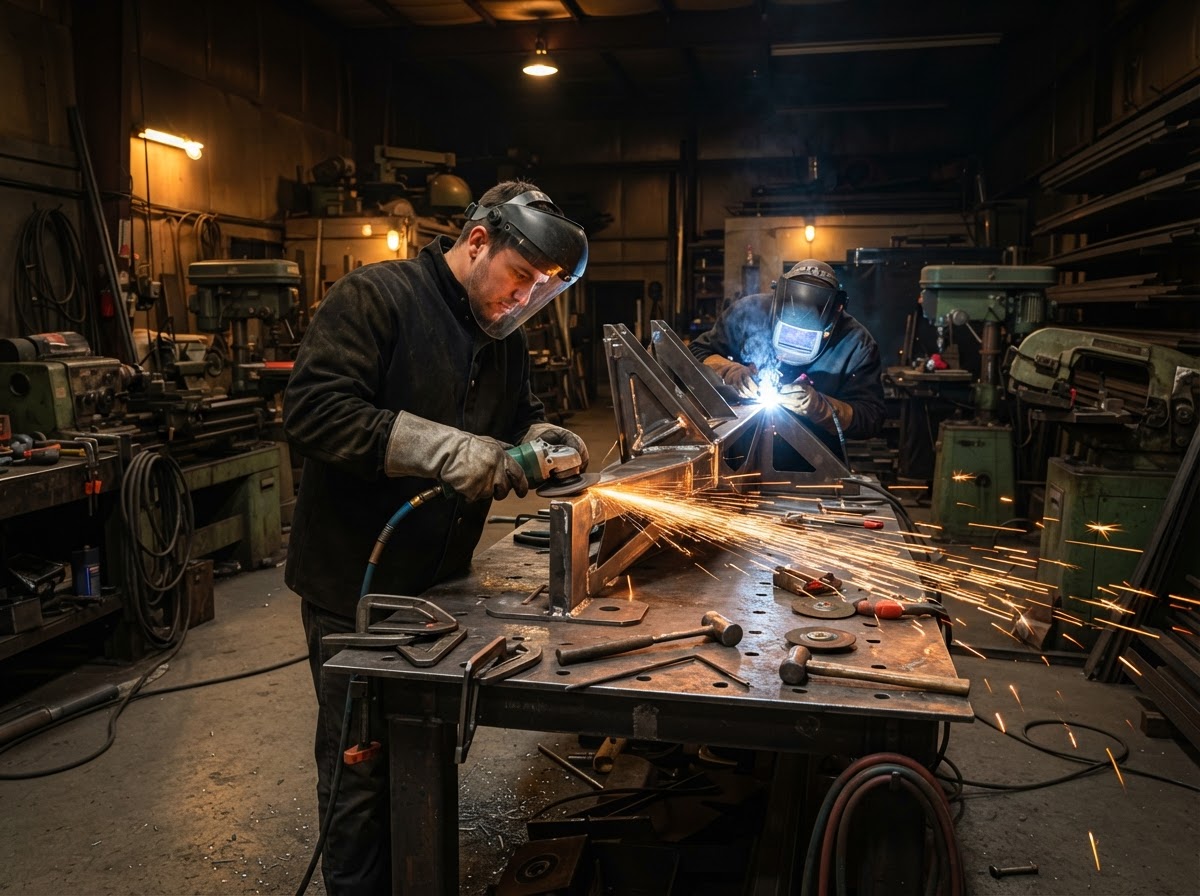
For example, consider a steel bracket that needs to support equipment in a specific location within a building. A standard bracket may not match the mounting points, the load requirements, or the available space. A custom-fabricated bracket, built to the exact dimensions and load requirements, fits perfectly and performs exactly as intended. The difference between a part that fits and a part that almost fits can be the difference between a reliable installation and one that requires ongoing maintenance.
At Micha Solution Welding, we fabricate components from drawings, samples, or specifications. Whether you have detailed engineering drawings or a rough sketch with measurements, we can plan and execute the fabrication to deliver a component that fits and performs as intended.
Performance and Strength
Custom fabrication also offers advantages in performance and strength. Mass-produced parts are designed for general applications, which means they are often overbuilt for some uses and underbuilt for others. A standard bracket rated for a certain load may be more than you need — or not enough. Custom fabrication allows you to specify exactly what the component needs to do and have it built to those requirements.
For structural applications, this is particularly important. A custom-fabricated structural component can be designed with the right material thickness, the right welds, and the right configuration for the specific loads it will carry. This avoids both over-engineering (which wastes material and money) and under-engineering (which risks failure). The component is built to do exactly what it needs to do — no more, no less.
Material selection is another performance advantage. Custom fabrication allows you to choose the specific material for the application — carbon steel for structural strength, stainless steel for corrosion resistance, or a specific grade for a particular environment. Mass-produced parts are typically available in a limited range of materials, which may or may not suit your application.
In South Florida's humid, salt-air environment, material selection is particularly important. Components that will be exposed to the elements may need corrosion-resistant materials or protective coatings. Custom fabrication allows you to choose materials and finishes that are appropriate for the specific conditions of your project.
Cost Comparison
Cost is where the comparison becomes nuanced. On a per-unit basis, mass-produced parts are almost always less expensive than custom fabrication. Mass production benefits from economies of scale — the cost of tooling, setup, and design is spread across thousands of units. Custom fabrication, by contrast, involves individual setup, cutting, fitting, and welding for each component.
However, the per-unit cost comparison only tells part of the story. When you factor in the cost of modifying standard parts to fit, the cost of compromised performance, and the cost of replacements when a part does not hold up, custom fabrication can be more cost-effective overall. This is especially true for one-off components, unique applications, and projects where standard parts simply do not exist.
For projects that require multiple identical components, a hybrid approach may make sense. Custom fabricate a prototype or a small batch, then evaluate whether mass production is feasible for larger quantities. For structural and custom applications, the per-unit cost premium of custom fabrication is often justified by the fit, performance, and reliability it provides.
At Micha Solution Welding, every project is evaluated individually and priced based on its specific requirements. We provide personalized estimates that reflect the actual scope, materials, and work involved. There is no one-size-fits-all pricing because there is no one-size-fits-all fabrication.
Timeline Considerations
Mass-produced parts have a clear timeline advantage. If the part is in stock, it can be shipped immediately. If it is not in stock, it may take days or weeks to arrive. Custom fabrication, by contrast, requires time to plan, cut, fit, weld, and finish each component.
For projects with tight timelines, mass-produced parts may be the only practical option. If a standard part meets the requirements and is available, there is no reason to wait for custom fabrication. But if the standard part does not meet the requirements — if it does not fit, does not perform, or does not exist — then the timeline for custom fabrication is the only timeline that matters.
At Micha Solution Welding, we work efficiently to minimize fabrication time without compromising quality. Once we evaluate your project, we provide a realistic timeline estimate. For urgent projects, we can discuss options for expediting the work. The key is to plan ahead and communicate your timeline requirements early in the process.
When Custom Fabrication Is the Right Choice
Custom fabrication is the right choice in several situations. First, when standard parts do not fit the application — non-standard dimensions, unique configurations, or specific space constraints. Second, when performance requirements exceed what standard parts offer — higher loads, specific material requirements, or demanding environmental conditions. Third, when the component does not exist as a standard product — a one-off design, a replacement for an obsolete part, or a custom assembly.
Custom fabrication is also the right choice when integration with existing construction is critical. A component that must fit within an existing structure, match existing connections, or integrate with other systems often requires custom dimensions and configuration that standard parts cannot provide.
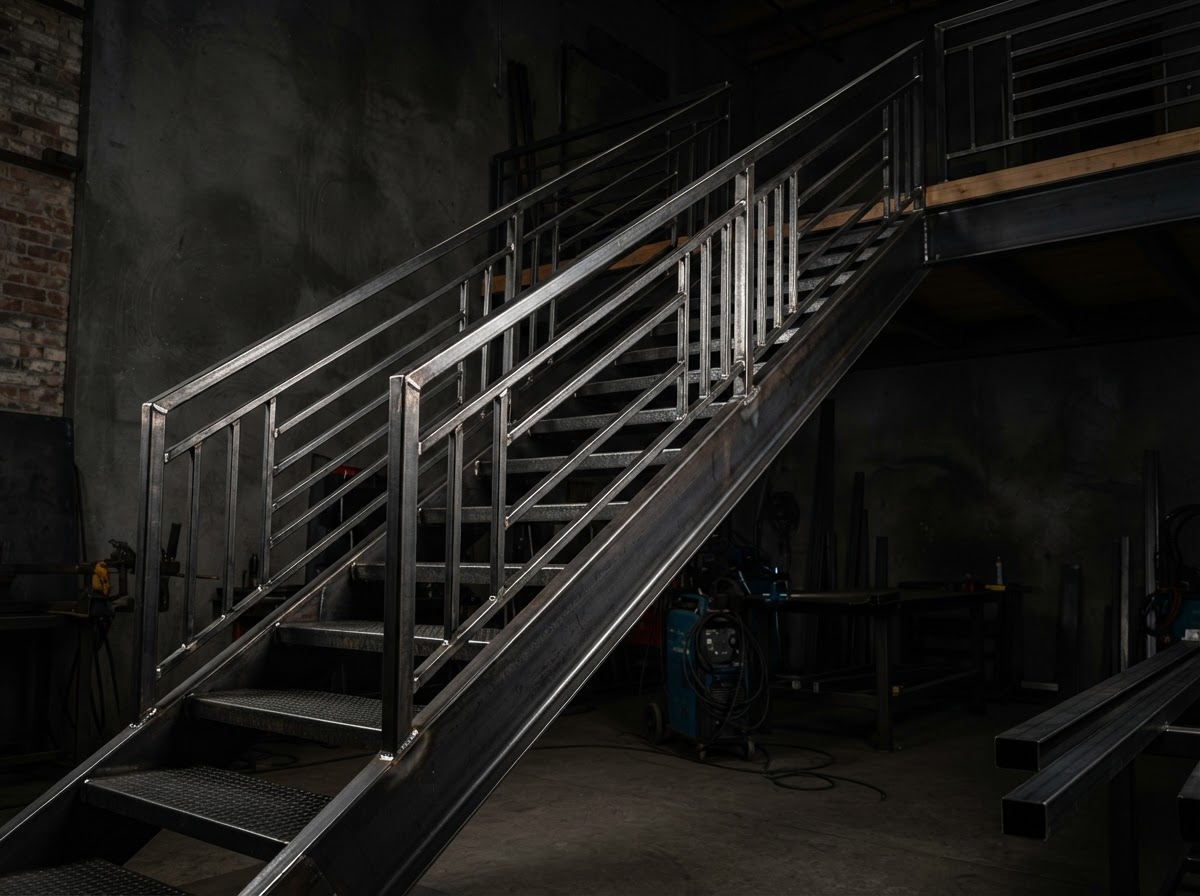
For structural applications — beams, frames, supports, braces, and structural assemblies — custom fabrication is often the only option that meets the specific load and dimensional requirements. Standard structural shapes are available, but the connections, modifications, and assemblies that make them work in a specific project require custom fabrication and welding.
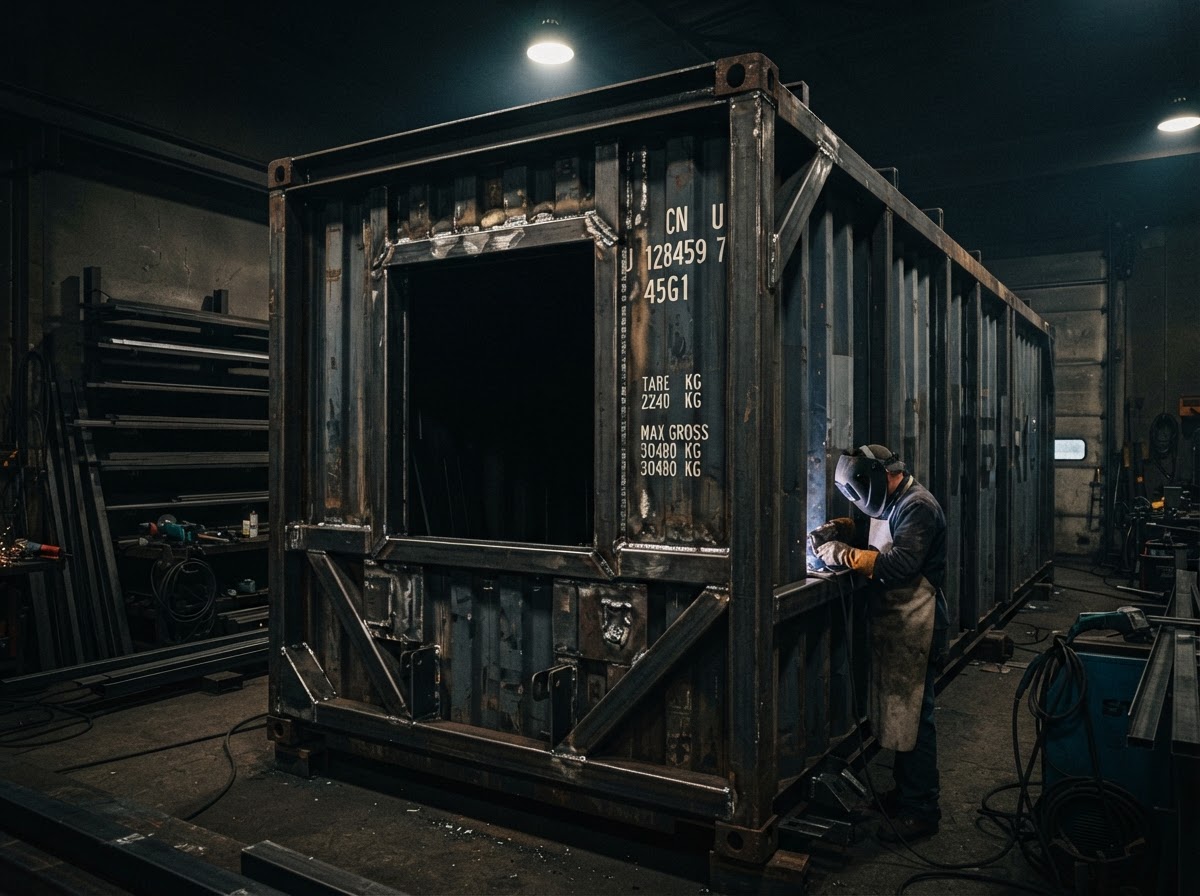
Container modifications represent another category where custom fabrication is essential. Each container project is unique — different openings, different configurations, different structural requirements. Custom fabrication allows the modifications to be planned and executed for the specific container and its intended use.
When Mass-Produced Parts Make Sense
Mass-produced parts make sense when they meet the project requirements. If a standard part fits, performs adequately, and is available at a reasonable cost, there is no reason to custom fabricate. For common applications — standard brackets, hardware, fasteners, and basic components — mass-produced parts are the practical choice.
Mass-produced parts also make sense for projects where dimensional precision is not critical, where the loads are well within the rated capacity of standard parts, and where the application is common enough that standard parts are readily available. In these cases, the time and cost savings of mass-produced parts are worth the trade-off in customization.
The key is to honestly evaluate whether a standard part truly meets the requirements. If it does, use it. If it does not — if it requires modification, if it compromises performance, or if it simply does not exist — then custom fabrication is the right approach.
Making the Decision for Your Project
The decision between custom fabrication and mass-produced parts depends on the specific requirements of your project. Consider the dimensional requirements, the performance requirements, the budget, the timeline, and the availability of standard parts. If standard parts meet all of these requirements, they are the practical choice. If they do not, custom fabrication is the solution.
At Micha Solution Welding, we help clients make this decision. We can evaluate your project, discuss whether standard parts are available and suitable, and provide a custom fabrication estimate if that is the better approach. With 15 years of experience serving Hialeah and South Florida, we bring the expertise to help you make the right choice.
If you have a project that may require custom metal fabrication, contact us for a free estimate. Share your drawings, samples, or requirements, and we will evaluate the project and provide a personalized quote. Whether the answer is custom fabrication, standard parts, or a combination of both, we will help you find the solution that best fits your project.
Frequently Asked Questions
Is custom metal fabrication more expensive than buying mass-produced parts?
Custom fabrication typically costs more per unit than mass-produced parts because it is made individually. However, for projects where standard parts do not fit or perform adequately, custom fabrication can be more cost-effective because it eliminates the need for modifications or replacements.
Can custom fabrication replicate an existing part?
Yes. If you have a sample of a part that needs to be replaced or replicated, a fabricator can measure it and produce a custom replacement. This is common for obsolete or hard-to-find parts.
How long does custom fabrication take?
Timeline depends on complexity. Simple components may be fabricated in a day or two. Complex assemblies with multiple parts, welding, and finishing may take longer. We provide a realistic timeline with your estimate.
Have a Welding Project in Mind?
Tell us what you need and get a personalized estimate — or call us directly.