From Design to Finished Gate
A custom metal gate starts as an idea and a set of measurements. It becomes a finished, installed gate through a process of fabrication and welding that transforms raw steel into a functional, durable, and attractive structure. Understanding this process helps property owners appreciate what goes into a custom gate and why the quality of fabrication and welding matters so much to the finished product.
At Micha Solution Welding in Hialeah, Florida, we handle the entire process — from evaluation and design through fabrication, welding, finishing, and installation. With 15 years of experience, we understand how each step in the process affects the finished gate, and we execute each step with the care and precision that custom metalwork demands.
This guide walks through the fabrication and welding process for a custom metal gate, from material selection to finished installation. Whether you are planning a gate project or simply want to understand how custom metalwork is built, this process provides insight into what goes into a quality custom gate.
Material Selection and Procurement
The process begins with material selection. Based on the gate's design, size, and application, the appropriate material is selected — including the type of steel, the shape (tubing, bar, sheet), the thickness, and the length. The material must be adequate for the loads the gate will carry, the conditions it will face, and the finish that will be applied.
For a typical custom gate, the frame is built from steel tubing — rectangular or square — because it provides strength in a clean profile that is easy to work with. The thickness of the tubing depends on the gate size and the loads. A small residential gate might use lighter tubing, while a large commercial gate requires heavier stock. Infill elements — bars, panels, or decorative pieces — are selected based on the design.
Once the material is selected, it is procured. Steel is available in standard lengths and sizes, and the material is ordered based on the gate's dimensions with allowance for cutting and waste. Material procurement must account for availability and lead times, because delays in material delivery can delay the entire project.
When the material arrives, it is inspected for quality and dimensions. Steel that is damaged, bent, or out of specification can cause problems during fabrication and in the finished gate. The material is checked before fabrication begins to ensure it meets the requirements of the project.
Cutting and Fitting
The first fabrication step is cutting the material to size. Each piece of the gate — frame members, infill bars, braces, and hardware mounts — is cut to the required length and angle. Cutting must be precise because errors in length or angle will cause the gate to be out of dimension or the joints to fit poorly.
For steel tubing and bar, cutting is typically done with an abrasive chop saw, band saw, or plasma cutter. The cutting method depends on the material, the thickness, and the required precision. Plasma cutting is used for complex shapes or sheet material. Saw cutting is used for straight cuts on tubing and bar.
After cutting, the pieces are fitted together — laid out in the gate's configuration to check the dimensions and the fit of the joints. This is a critical step because it allows the fabricator to identify and correct any issues before welding begins. If a piece is too long, too short, or cut at the wrong angle, it is re-cut or replaced at this stage.
Fitting also involves preparing the joint surfaces — cleaning off mill scale, oil, or other contaminants that could affect weld quality, and beveling edges where full-penetration welds are required. Proper joint preparation is essential for sound welds, and it is done during the fitting stage before welding begins.
Welding the Frame
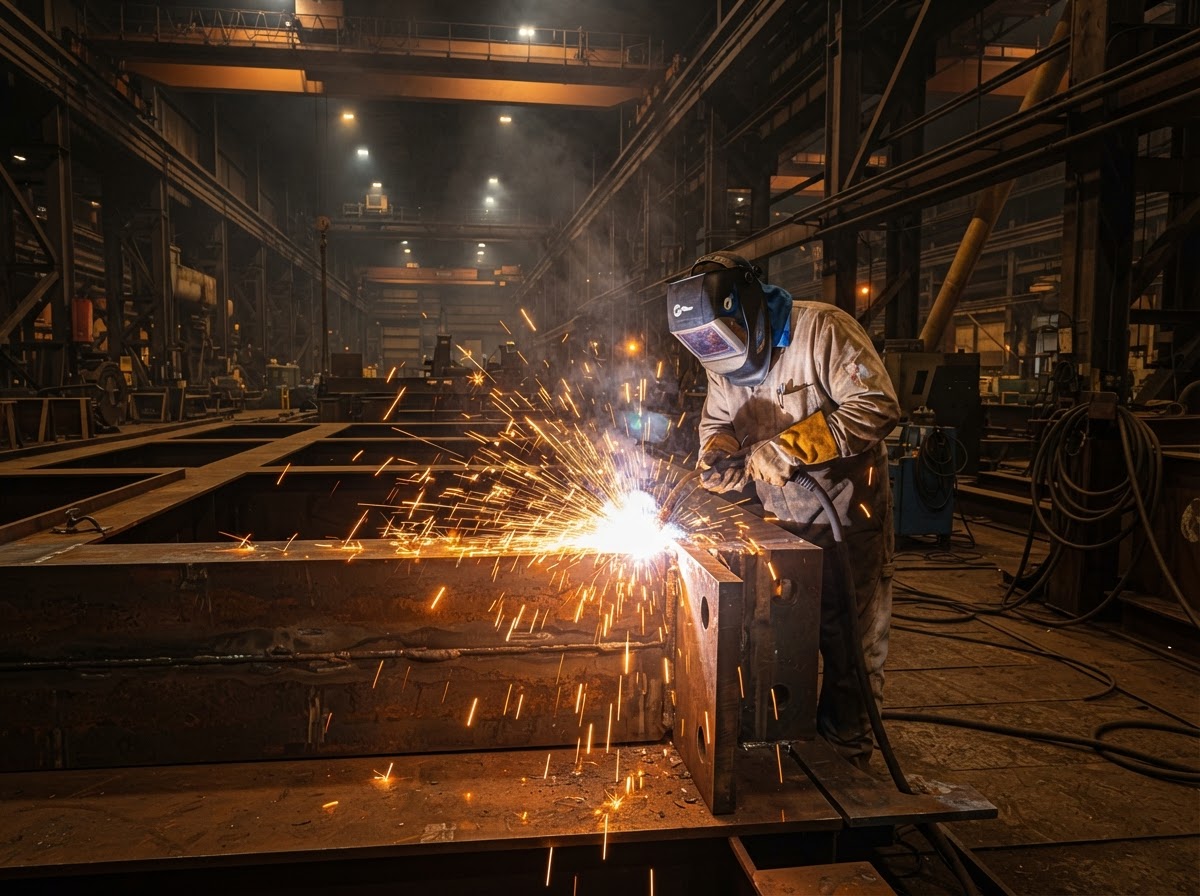
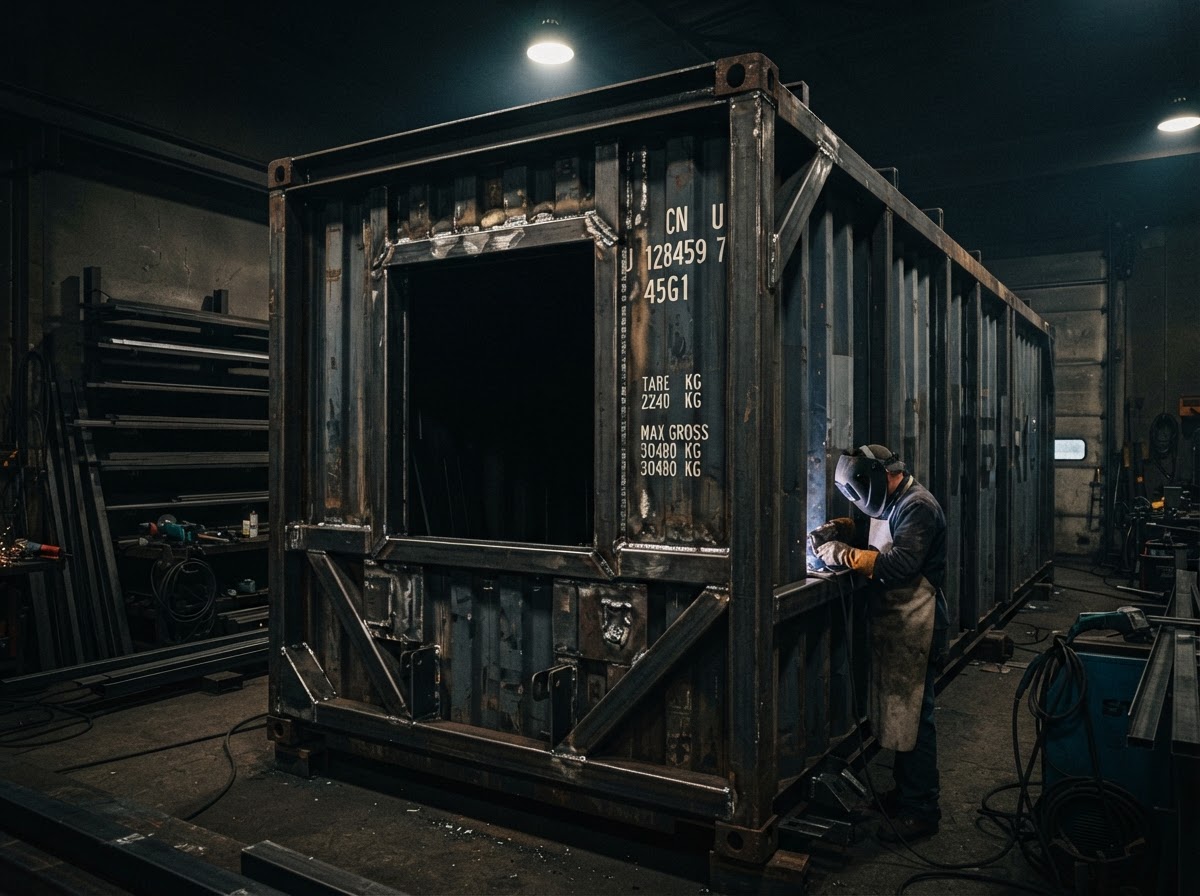
Once the pieces are cut and fitted, the frame is welded. The frame is the structural skeleton of the gate, and the quality of the frame welding directly affects the gate's strength, rigidity, and longevity. Frame welding is done in a specific sequence to minimize distortion and ensure the frame remains square and true.
The frame members are clamped or tack-welded in position to hold them while the final welds are made. Tack welds are small welds placed at intervals to hold the pieces in alignment. Once the frame is tacked and checked for squareness and dimensions, the final welds are made.
Welding technique matters. The welder maintains the correct arc length, travel speed, and electrode angle to produce sound welds with proper penetration and bead profile. For multi-pass welds on thicker material, each pass is cleaned before the next is applied. The welds at the corners and connections are particularly important because these are the points where the gate's loads are transferred.
After the frame is welded, it is checked for squareness and alignment. Heat from welding can cause distortion, and if the frame is not square, the gate will not fit the opening properly. If distortion has occurred, it is corrected before the infill and finishing work begins. A square, true frame is essential for a gate that operates smoothly.
Adding Infill and Details
After the frame is complete, the infill elements are added. Infill is what fills the space within the frame — vertical bars, horizontal bars, panels, or decorative elements. The infill is welded to the frame at appropriate intervals, and the welding must be as sound as the frame welding because the infill contributes to the gate's rigidity.
For vertical bar gates, the bars are spaced at regular intervals and welded to the top and bottom frame members. The spacing is determined by the design and any security requirements. Each bar is cut to length, positioned, and welded at both ends. The welds must be strong enough to hold the bar in place but not so heavy that they distort the frame.
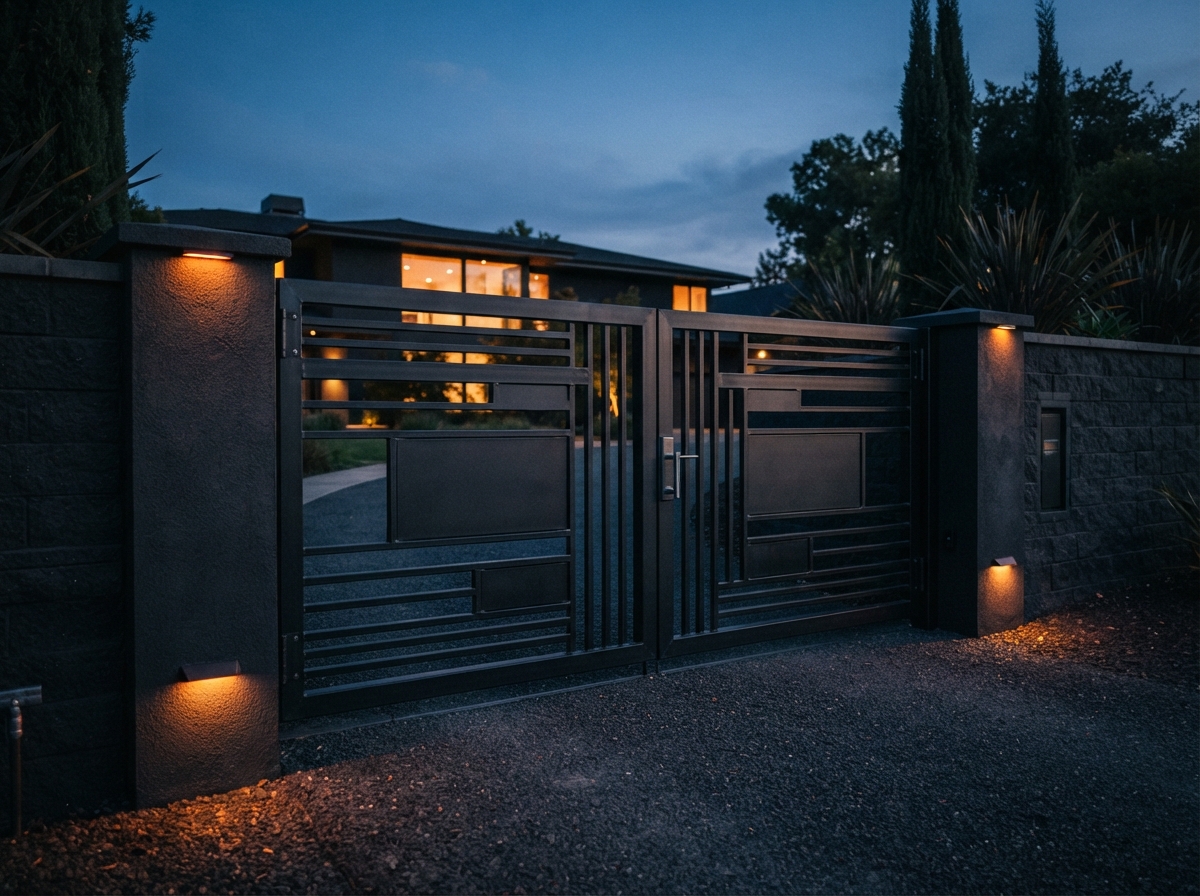
For panel gates, the panel material is cut to size and welded or fastened to the frame. Panel gates provide privacy and security but are heavier and catch more wind than open designs. The frame must be designed to carry the panel's weight and the wind loads on the panel surface.
Decorative elements — scrollwork, ornaments, or custom features — are added after the structural elements are complete. These elements are welded to the frame or infill and must be securely attached. While they are primarily aesthetic, they must also be strong enough to withstand handling and weather.
Finishing and Coating
After all welding is complete, the gate is finished. Finishing involves grinding welds smooth where needed, removing spatter, and preparing the surface for coating. The goal is a clean, professional appearance and a surface that will accept the protective coating properly.
Weld grinding is done carefully. Welds that will be visible are ground smooth for appearance. Welds that are structural but hidden may be left as-is or lightly ground to remove spatter. Over-grinding can weaken welds, so the grinding is done with care — enough to create a clean appearance without compromising the weld's strength.
Surface preparation for coating is critical. The steel must be clean and free of rust, oil, and contaminants for the coating to adhere properly. This may involve wire brushing, grinding, sandblasting, or chemical cleaning, depending on the condition of the steel and the coating to be applied.
The coating is then applied. For paint, this typically involves a primer coat followed by one or more top coats. For powder coating, the gate is coated with powder and baked to cure the finish. For galvanizing, the gate is dipped in molten zinc. The coating method depends on the gate's exposure conditions and the desired appearance. In South Florida's corrosive environment, the coating quality directly affects the gate's service life.
Installation
The final step is installation. If new posts are needed, they are set in concrete footings at the correct spacing and alignment. The footings must cure before the gate is hung. If existing posts are used, they are evaluated and prepared for the new gate.
The hinges are attached to the posts and the gate. The gate is hung on the hinges and checked for smooth operation. Adjustments are made to the hinge position or the gate alignment as needed to ensure the gate swings freely and latches properly. The latch hardware is installed and adjusted.
Finally, the gate is tested. It is opened and closed multiple times to verify smooth operation. The latch is tested to ensure it engages and releases properly. The gate is checked for sagging, binding, or rubbing. Any issues are corrected before the installation is considered complete.
At Micha Solution Welding, we handle the entire process — from material selection through installation. This integrated approach ensures that every step is executed correctly and that the finished gate fits, operates, and performs as intended. With 15 years of experience serving Miami-Dade CountyMiami-Dade County, we bring the expertise and attention to detail that custom gate fabrication demands. Contact us at (305) 515-0490 or request a free estimate online to start your custom gate project.
Frequently Asked Questions
How long does it take to fabricate a custom metal gate?
Fabrication time depends on the gate's complexity. A simple gate may be fabricated in a day or two. A complex gate with decorative elements or large dimensions may take several days to a week. We provide a realistic timeline with your estimate.
What type of welding is used for metal gates?
The welding process depends on the material, thickness, and conditions. MIG welding is common for gate fabrication in a shop environment. Stick welding may be used for field repairs or modifications. The process is selected based on what produces the strongest, cleanest welds for the specific gate.
Can a gate be repaired if a weld cracks or a frame bends?
Yes. Cracked welds can be ground out and re-welded. Bent frame members can often be straightened or replaced. If your gate is damaged, contact us to assess the repair options. In many cases, a damaged gate can be restored to full function.
Have a Welding Project in Mind?
Tell us what you need and get a personalized estimate — or call us directly.